









Flowers for Henna
Historical Roots and Cultural Presence of Flowers for Henna
Flowers have long played a quiet but influential role in the world of henna. Although henna itself comes from the Lawsonia inermis plant, the ritual surrounding mehndi has always been enriched by blossoms—used for fragrance, symbolism, and skin-soothing properties. From South Asia to the Middle East and North Africa, flowers help transform the simple act of applying henna into a ceremonial, sensory experience. Their presence speaks to the deeper cultural purpose of mehndi: beauty, celebration, and connection.
Aromatics That Shape the Experience
Scent is an essential part of traditional henna artistry, and certain flowers have become closely associated with the ritual. Jasmine, perhaps the most iconic, adds a sweet fragrance that relaxes the mind during long mehndi sessions. Rose petals and rosewater bring a soft, cooling aroma, cherished especially by brides. Lavender, though a more recent addition, is valued for its calming profile and compatibility with sensitive skin. These flowers do not alter the dye but elevate the experience surrounding it, making the process feel luxurious and ceremonial.
Jasmine: The Classic Companion
Jasmine holds a special place in henna preparation. Its scent is deeply tied to weddings and festivals across South Asia and the Middle East. The flower is used dried, fresh, or in the form of essential oil—each method releasing a fragrance that enhances the atmosphere. Symbolizing purity and joy, jasmine turns henna preparation into a sensory tradition rather than a simple beauty practice.
Rose: For Cooling and Comfort
Rose petals continue to be among the most used floral additions in henna. Many artists steep dried rose petals in water or mix rosewater into the paste for added hydration and smoothness. The flower carries cultural weight as a symbol of love, grace, and beauty. In practice, it helps cool the skin and soften the texture of the paste, making application gentler and more comfortable.
Hibiscus: Enhancing Color and Depth
While most flowers influence aroma, hibiscus is known for contributing to dye richness. Its deep red pigments can subtly warm the final stain when used as a tea or powder. Hibiscus also nourishes the skin, making it popular in modern herbal henna blends. For artists seeking a warmer hue or a botanical boost, hibiscus stands out as a practical and aesthetic choice.
Marigold: A Flower of Festivity
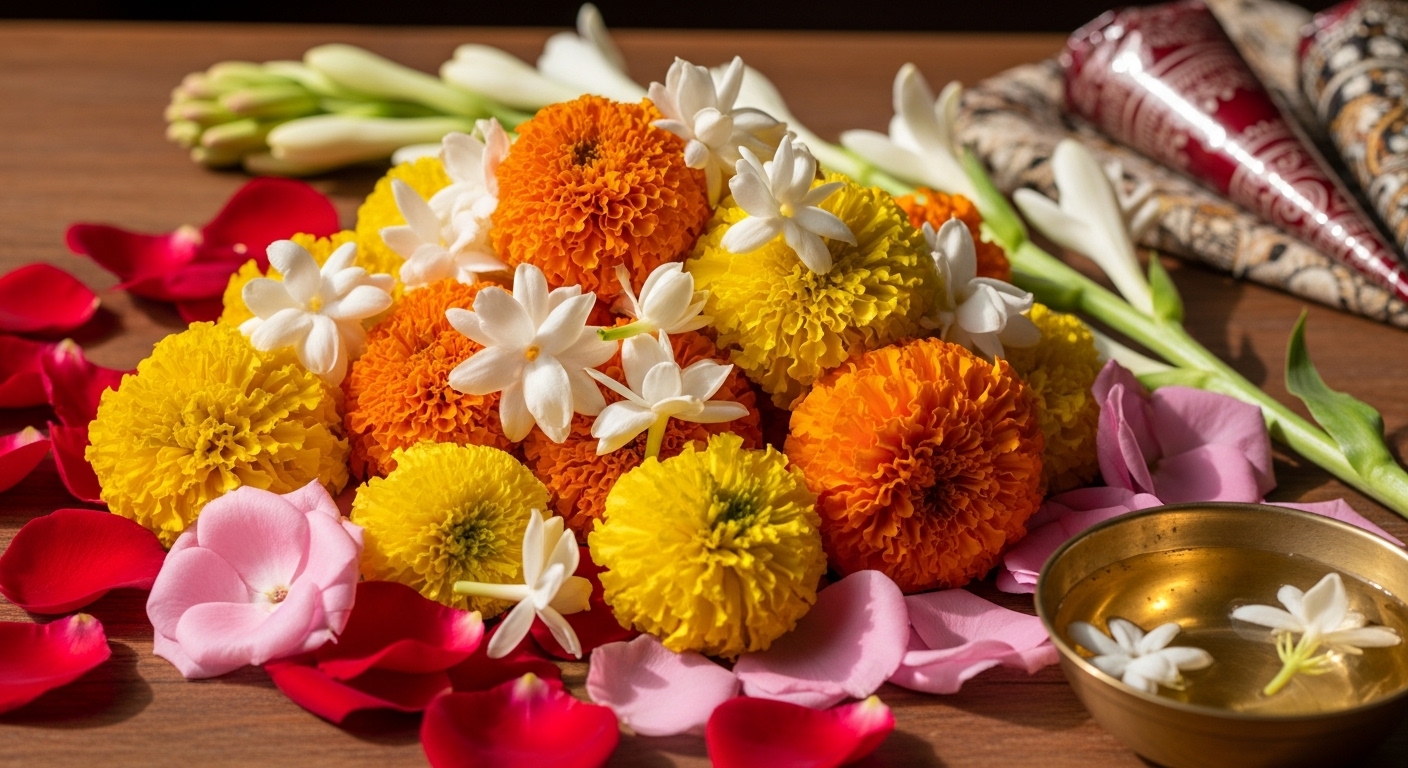
Marigold plays a vibrant role in the cultural backdrop of henna rituals. Often used in decoration or infused water, it symbolizes good fortune and celebration. Though it does not alter the stain, marigold enhances the ceremonial atmosphere surrounding mehndi events. Its bright petals—yellow or orange—are scattered around henna trays and spaces to mark the occasion with visual warmth and tradition.
Lotus: A Spiritual Accent
In regions where lotus carries spiritual meaning, the flower is occasionally added to henna preparation. It symbolizes purity, protection, and rebirth. Used more for symbolism than function, lotus infuses the ritual with deeper cultural identity. Its presence in bridal or religious mehndi underscores the emotional and spiritual layers of the ceremony.
Chamomile: A Gentle Option for Sensitive Skin
Chamomile is widely appreciated for its calming properties. Artists often use chamomile tea to mix henna, creating a soothing base for those with sensitive or easily irritated skin. Its mild fragrance and anti-inflammatory qualities make it a thoughtful addition to modern henna practices that prioritize comfort and skin health.
Orange Blossom: Freshness and Bright Energy
Orange blossom adds a refreshing, citrus-based fragrance that pairs well with henna’s natural earthiness. Often used in the form of orange blossom water, it brings an uplifting energy to the mixture and is popular among those who prefer light, bright scents over traditional floral tones. The flower symbolizes joy and purity—qualities often celebrated at mehndi gatherings.
Methods of Incorporating Flowers for Henna
Artists and enthusiasts use flowers in several ways, depending on the desired outcome. Floral-infused water is a common method, made by steeping petals and using the resulting liquid to mix fresh henna powder. Dried and powdered flowers, especially hibiscus, can be added directly to the mixture. Essential oils derived from jasmine, lavender, rose, and orange blossom provide strong fragrance without compromising dye release. And even when not mixed into the paste itself, fresh flowers are used extensively to decorate mehndi trays, cones, and ceremony spaces.
Choosing Flowers for Henna Based on Purpose
The right flower depends on the intent behind the henna preparation. For aromatic depth, jasmine and rose remain favorites. For color enhancement, hibiscus offers the most visible effect. Those with sensitive skin may lean toward chamomile or lavender. For ceremonial settings, marigold and lotus reinforce cultural significance and atmosphere. These choices highlight how flowers serve both practical and symbolic roles, making henna more than a cosmetic application—it becomes a sensory ritual.
A Continuing Blend of Tradition and Innovation
The use of flowers in henna continues to evolve. Traditional blossoms remain essential to weddings, festivals, and community gatherings. Meanwhile, modern henna artists experiment with floral oils, herbal infusions, and botanical powders to enhance the paste. Whether honoring centuries-old customs or embracing new techniques, flowers remain central to the beauty and meaning of mehndi.
Conclusion of Flowers for Henna
Flowers enrich henna in ways that go beyond scent or decoration. They add emotional depth, cultural symbolism, and sensory elegance to the art of mehndi. From the aroma of jasmine to the color-enhancing power of hibiscus, each flower contributes something unique to the ritual. Together, they transform henna from a simple plant-based dye into an expression of tradition, celebration, and artistry.