









A Celebration of Amazigh Heritage and Community
Introduction of Bachir Morocco Festival
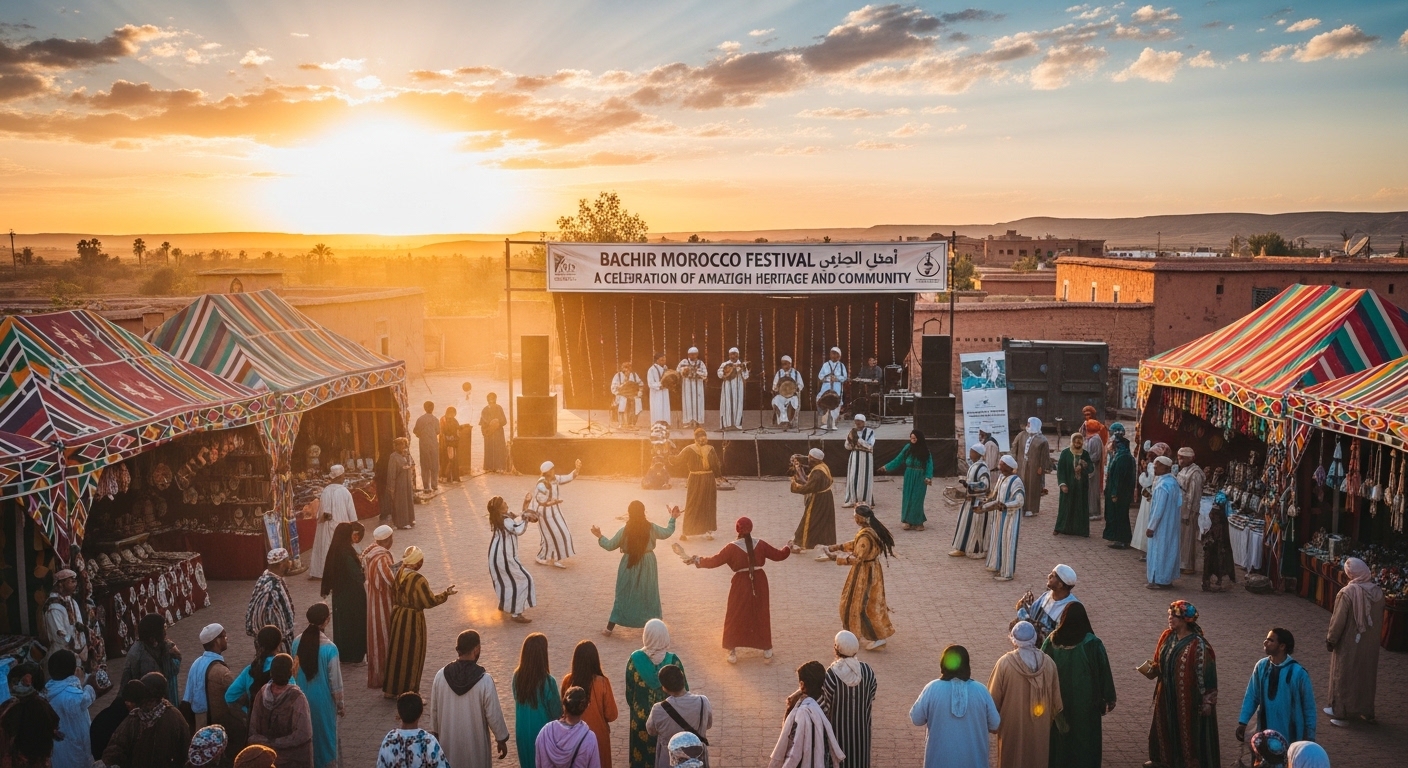
The Bachir Morocco Festival, more accurately known as the Festival Bachikh, is one of Morocco’s most vibrant cultural expressions rooted in Amazigh (Berber) heritage. Each year, in the northern Rif region of Morocco, this festival brings communities together to celebrate music, ritual, identity, and the promise of a fruitful agricultural season.
Origins and Cultural Significance
What Is the Festival Bachikh?
The Festival Bachikh is a deeply traditional event observed primarily by the Senhaja Sraïr Amazigh community in Morocco’s Rif Mountains. It centers around the ritual of “Bachikh,” a ceremony involving chants, songs, and communal gatherings intended to invoke prosperity and spiritual renewal around the Amazigh New Year.
Roots in Amazigh Tradition
Amazigh culture is one of the foundational strands of Morocco’s identity, predating Arab and later Islamic influences. The Bachikh festival serves not only as entertainment but as a living preservation of ancient oral and musical traditions. These traditions are passed down through generations, reinforcing language (Tasenhajit), collective memory, and social cohesion.
When and Where Is It Held?
Timing of the Festival of Bachir Morocco Festival
The festival usually takes place around January 11–13, coinciding with Yennayer, the Amazigh New Year, which marks a symbolic fresh start in agricultural and spiritual life.
Location Bachir Morocco Festival
The main hub for Bachikh is Targuist, in the northern Tanger–Tétouan–Al Hoceima region of Morocco. This area is known for its rugged landscapes and deep Amazigh cultural roots.
Festival Activities and Highlights in Bachir Morocco Festival
Traditional Music and Dance
At the heart of Bachikh are performances of ancient chants and dances unique to the Senhaja community. These musical traditions are not just artistic expressions but are considered mediums to connect with ancestors, the land, and the spiritual forces believed to influence the fertility of crops and livestock.
Cultural Exhibitions and Craft
Alongside performances, the festival showcases Amazigh arts and crafts. Attendees can experience exhibitions of local textiles, jewelry, and other handmade items that reflect the region’s aesthetic and symbolic creativity.
Conferences and Discussions
Organizers also host discussions and panels that explore themes such as cultural identity, linguistic preservation, and the role of creative expression in safeguarding traditions for future generations. These educational aspects add intellectual depth to the festivities.
Community Rituals and Meals in Bachir Morocco Festival
Central to the festival is its sense of community: shared meals, collective storytelling, and social bonding. These events create a sense of unity and reaffirm communal ties, which are essential values in Amazigh society.
Symbolism and Meaning of Bachir Morocco Festival
Invoking Prosperity and Fertility
Bachikh rituals are believed to help invoke fertility, good harvests, and prosperity for the year ahead. This is deeply connected to the agricultural lifestyle traditionally lived by many Amazigh villages, where seasonal cycles dictate community rhythms.
Preserving Identity Through Music and Oral Tradition
Music and oral speech are powerful vehicles of memory and identity. By maintaining songs, chants, and spoken histories, the festival plays a role in preventing cultural erosion, especially in a globalized era where intangible heritage often gets marginalized.
Impact on Local and National Culture
A Living Cultural Heritage
Unlike commercial music festivals that primarily entertain, Bachikh carries heritage transmission at its core. It’s a space where elders share wisdom with youth, and present-day Amazigh artists reinterpret ancient forms for contemporary audiences.
Tourism and Cultural Interest
While primarily a local celebration, Bachikh is increasingly attracting interest from cultural tourists and scholars curious about indigenous traditions. This kind of attention can support economic activity in rural regions and further validate indigenous cultural practices on national and global stages.
Challenges and the Future
Balancing Tradition and Modernity
One ongoing challenge for festivals like Bachikh is maintaining authenticity while embracing the benefits of broader visibility. There is always a tension between preserving deep-rooted rituals and adapting to contemporary cultural consumption.
Youth Engagement
Younger generations are vital to the survival of any tradition. Ensuring that youth remain engaged — through education, artistic innovation, and community participation — will shape the festival’s future vitality.
Conclusion of Bachir Morocco Festival
The Bachir Morocco Festival — rooted in the ancient Festival Bachikh — is a testament to Morocco’s rich cultural mosaic. It stands as a celebration of Amazigh heritage, communal solidarity, and ancestral wisdom, blending ritual music and dance with social meaning. As Morocco continues to honor its diverse identities, festivals like Bachikh illuminate the enduring power of tradition in a rapidly changing world.