







Introduction
Located in northeastern Thailand, Buriram Province stands out as a region where ancient history, rich culture, and modern development intersect seamlessly. Known for its Khmer-era ruins, passionate sports culture, and evolving tourism scene, the province has transformed from a quiet corner of the Isan region into a dynamic destination attracting visitors from across the world. Whether you’re drawn to archaeology, festivals, food, or football, Buriram offers a surprising range of experiences that showcase Thailand’s diverse identity.
Historical Background
The history of Buriram stretches back over a thousand years, with strong influences from ancient Khmer civilization. Evidence of past kingdoms can be found in stone temples, inscriptions, and architectural remnants scattered across the province. These ruins hint at Buriram’s importance as part of a strategic cultural and trade network in Southeast Asia. Over time, the region transitioned into a Thai-majority province while preserving its multicultural identity. Today, Buriram successfully blends its ancient roots with a modern lifestyle that continues to evolve rapidly.
Buriram’s Cultural Identity
Buriram’s culture is shaped by a mix of Thai, Khmer, and Lao influences, reflected in its language, customs, and traditional celebrations. Local residents take great pride in their heritage, often showcasing it through folklore performances, temple festivals, and community gatherings. The provincial identity emphasizes warmth, hospitality, and a strong attachment to family and tradition. At the same time, modern cultural elements—such as sports enthusiasm and creative tourism—are increasingly woven into everyday life, giving Buriram a youthful and energetic atmosphere.
Phanom Rung: The Icon of Buriram
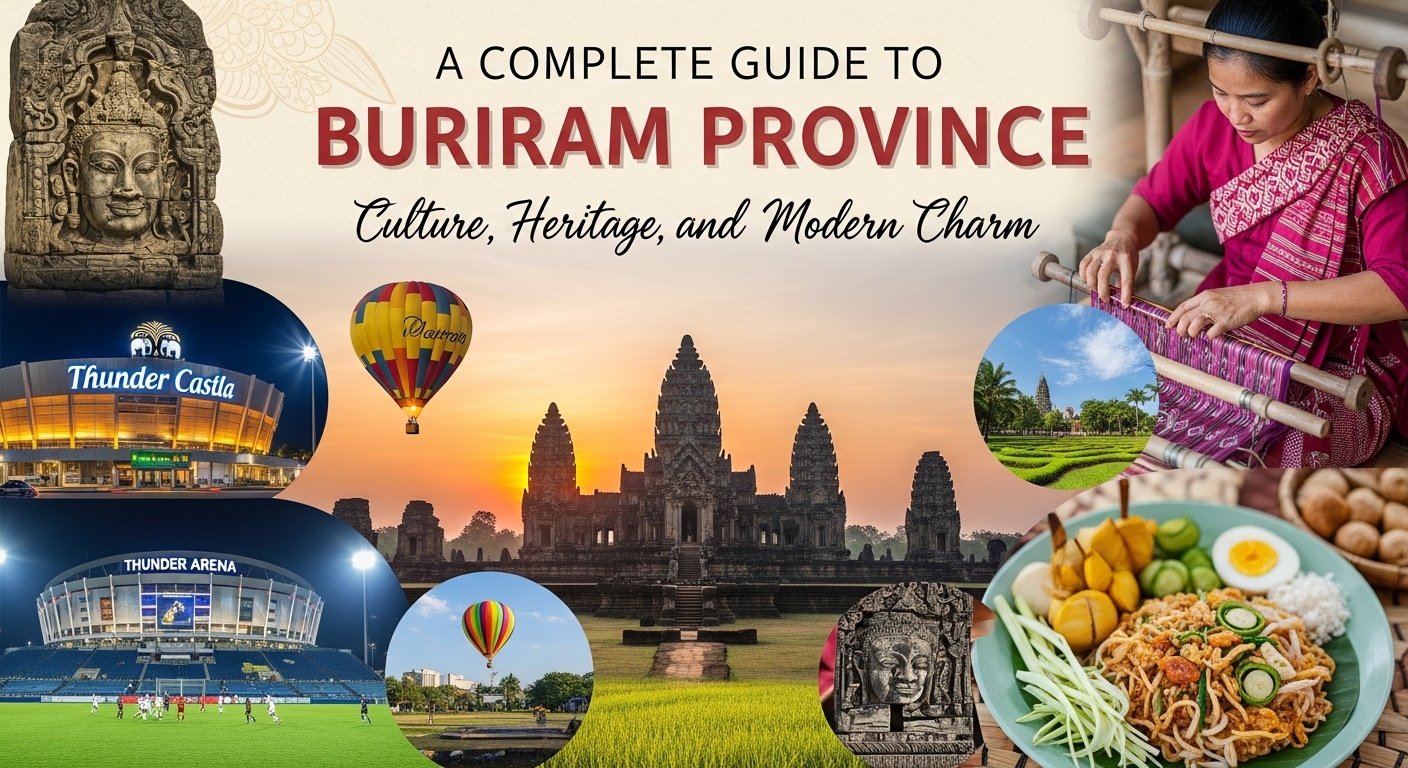
No landmark represents Buriram more proudly than Phanom Rung Historical Park. This ancient Hindu temple complex sits atop an extinct volcano, offering one of Thailand’s most dramatic archaeological sites. Built between the 10th and 13th centuries, the temple showcases classic Khmer architecture with intricately carved lintels, sandstone pathways, and grand staircases aligned perfectly with the sunrise during special annual events.Every year, visitors gather to witness “the magic sunrise,” when sunlight passes directly through all 15 doorways of the temple—a moment that highlights the astronomical sophistication of ancient builders. Phanom Rung is not only a historical attraction but also a symbol of Buriram’s spiritual and cultural heritage.
Muang Tam and Other Archaeological Sites
Just a short distance from Phanom Rung lies Muang Tam, another impressive Khmer sanctuary featuring ponds, symmetrical designs, and elegant stonework. Its serene layout and well-preserved atmosphere make it a must-visit for anyone fascinated by ancient civilizations. Beyond these major sites, Buriram is home to smaller ruins, pottery remains, and historical artifacts that collectively illuminate the province’s long-standing human presence. These archaeological treasures position Buriram as an essential destination for history lovers and researchers.
Buriram: Thailand’s “City of Sports”
Over the past decade, Buriram has earned a new title: Thailand’s “City of Sports.” Much of this transformation revolves around the growth of local sports culture and the development of modern stadiums and facilities. At the center of this movement is the football club Buriram United, which has built an enormous fan base and brought national attention to the province.The home stadium, Chang Arena, is among the largest and most advanced football stadiums in Thailand. Nearby, the Buriram International Circuit hosts major motorsport events, including Super GT races. These venues have elevated the province’s reputation, attracting athletes, fans, and tourists throughout the year. Sports tourism has become a key economic and cultural driving force in Buriram’s growth.
Natural Landscapes and Outdoor Attractions
Beyond its historical and sporting landmarks, Buriram offers beautiful natural scenery ideal for relaxation and exploration. The province features rolling hills, rice fields, reservoirs, and volcanic mountains that offer great opportunities for outdoor activities. Khao Kradong Forest Park, another dormant volcano site, provides hiking trails, a crater viewpoint, and a giant Buddha statue overlooking the city. It’s a favorite spot for both locals and visitors seeking fresh air and stunning panoramas.Wetlands and lakes across the province support local fishing communities, bird species, and lush vegetation. These landscapes contribute to Buriram’s charm, offering pockets of calm away from the busier attractions.
Local Festivals and Traditions
Festivals in Buriram reflect the province’s deep cultural spirit. The Phanom Rung Festival, held annually at the ancient temple, features traditional dances, local cuisine, craft markets, and reenactments of historical ceremonies. Participants often dress in ancient-style clothing, adding authenticity to the event’s cultural richness.The Rocket Festival, a tradition shared across the northeast, involves launching homemade rockets to encourage rainfall for the rice-growing season. This event brings together colorful costumes, music, and community celebration. Religious festivals, temple fairs, and agricultural events all contribute to Buriram’s vibrant cultural calendar.
Food and Local Cuisine
Food is a major part of Buriram’s identity, with dishes influenced by Isan, Thai, and Khmer culinary traditions. Spicy salads, grilled meats, sticky rice, and fermented fish sauces dominate local menus. Popular dishes include spicy minced meat salads, grilled chicken, and locally made sausages. Fresh produce from nearby farms enhances the flavor and authenticity of the cuisine.Buriram also takes pride in its snacks and sweets sold at markets, festivals, and roadside stalls. Together, these dishes reflect the warmth and creativity of local culinary traditions while offering travelers a memorable gastronomic experience.
The Rise of Buriram City
The provincial capital, Buriram, has seen rapid development in recent years. Modern cafés, shopping centers, hotels, and entertainment spots have emerged alongside traditional markets and temples. This balance of new and old creates an inviting urban environment that remains true to its cultural roots.
Transportation improvements—including trains, roads, and domestic flights—have made the city more accessible than ever. As tourism grows, Buriram City continues to expand its services and attractions, becoming a bustling hub that complements the rest of the province.
Handicrafts and Local Products
Buriram is known for its handicrafts, particularly silk weaving and pottery. Local artisans create beautifully woven textiles using traditional methods passed down through generations. These silks often feature regional patterns and are sold in markets, craft villages, and cultural fairs. Pottery goods, baskets, and handmade accessories also reflect the creativity and skill found throughout the province.Visitors can participate in workshops to learn more about these traditional crafts, supporting local artisans while gaining deeper insight into Buriram’s cultural heritage.
Growing Tourism and Hospitality
Tourism in Buriram has grown steadily, supported by improved infrastructure, increasing global recognition, and active promotion. Hotels range from luxury resorts to budget accommodations suitable for all types of travelers. Friendly guesthouses offer warm hospitality and local insights, while newer boutique hotels cater to travelers seeking comfort and modern amenities.Transport options within the province, such as buses, taxis, scooters, and rental cars, make it easy to explore Buriram’s many attractions. Tourism development continues to evolve with an emphasis on preserving culture and promoting sustainable travel.
Economy and Local Development
Agriculture remains a major economic contributor in Buriram, with rice fields and cassava farms spread across the province. However, in recent years, the economy has expanded to include tourism, sports events, retail businesses, and service industries. Local government initiatives support community development, environmental conservation, and cultural preservation.The combination of tradition and modernization has strengthened Buriram’s economic landscape, creating opportunities for both rural and urban communities.
Why Buriram Province Is Unique
Buriram’s uniqueness lies in its fusion of heritage, sports, culture, and natural beauty. Few places offer such a diverse range of attractions—from ancient temples on volcanic hills to modern stadiums buzzing with energy. Every corner of the province tells a story: one of history, passion, community, and transformation.Travelers seeking meaningful experiences will find Buriram rich with authenticity and charm. Whether exploring archaeological sites, enjoying local cuisine, cheering for a football match, or simply observing the rhythm of rural life, visitors often leave with lasting memories and a deeper appreciation of Thailand’s regional diversity.
Conclusion
Buriram Province stands today as one of Thailand’s most dynamic and culturally vibrant regions. With its stunning Khmer temples, passionate sports culture, beautiful landscapes, and warm local communities, the province offers a travel experience that balances history and modernity. As Buriram continues to grow and innovate, it remains grounded in its heritage, inviting visitors to explore a place where the past inspires the present. Whether for adventure, learning, or relaxation, Buriram promises a journey filled with discovery and authentic Thai charm.