






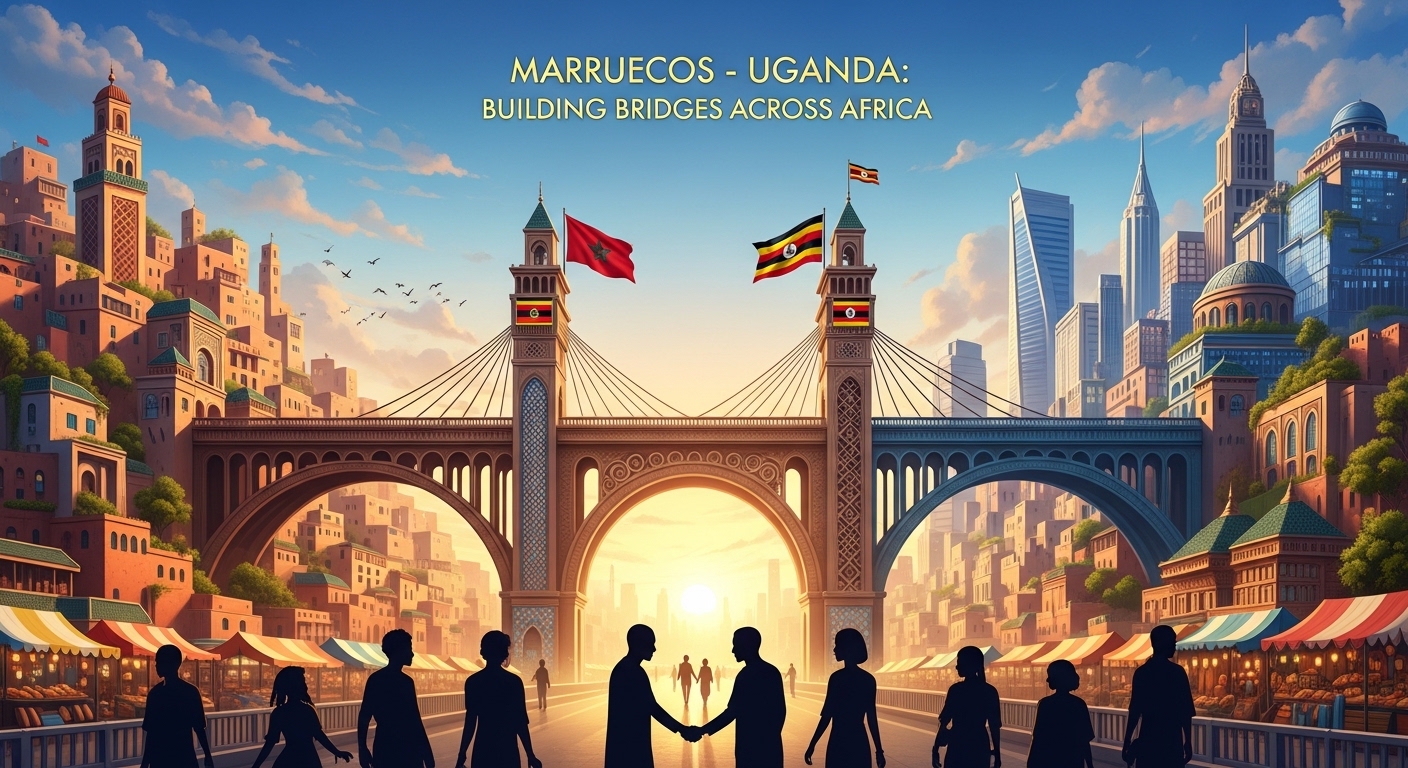
Building Bridges Across Africa
Relations between Morocco and Uganda have steadily evolved into one of the most promising inter-African partnerships of recent years. Though they stand on opposite ends of the continent—one facing the Atlantic and Mediterranean in the northwest, the other nestled within the Great Lakes region in the east—their cooperation reflects a shared vision of African-led development, economic diversification, and regional stability. As both Marruecos – Uganda countries strengthen diplomatic ties, explore trade opportunities, and collaborate on agriculture, education, and security, the Marruecos–Uganda connection continues to gain strategic importance in Africa’s shifting political landscape.
A Diplomatic Relationship Rooted in Shared Goals
Diplomatic ties between Morocco and Uganda gained new momentum in the 21st century, driven by an African-centered foreign policy that seeks stronger south–south partnerships. Both countries recognize that unity and interdependence are crucial for addressing the challenges facing the continent, from economic inequality to climate change. Over recent years, high-level meetings, bilateral agreements, and cooperative forums have reinforced mutual respect and political alignment. Morocco’s renewed engagement with African institutions and Uganda’s commitment to continental cooperation pave the way for deeper collaboration in governance, development, and diplomacy.
Economic Cooperation: Expanding Trade and Investment
One of the strongest pillars of the Marruecos–Uganda relationship is the drive to expand economic ties. Trade volumes between the two countries remain relatively modest but show clear potential. Morocco’s industrial experience—particularly in fertilizers, renewable energy, automotive components, and construction—aligns well with Uganda’s growing demand for infrastructure development, agricultural modernization, and energy expansion.
Uganda, with its fertile soils and expanding consumer base, offers trade possibilities in coffee, tea, fish, fruits, and textiles. Morocco’s globally recognized phosphate and fertilizer industries can support Uganda’s agricultural ambitions, especially as Kampala pushes to increase food security and export-driven farming. Investment missions from both sides continue to explore sectors such as agri-business, logistics, and manufacturing, hinting at a future where trade corridors between North and East Africa grow stronger.
Agricultural Development: A Strategic Meeting Point
Agriculture is a natural area of cooperation between Morocco and Uganda. Uganda’s economy relies heavily on farming, and Morocco has long been a continental leader in agricultural research, irrigation technology, and fertilizer production. Collaborative initiatives—such as training programs, soil management workshops, and partnerships between agricultural institutes—are helping Ugandan farmers adopt more efficient, sustainable practices.
Meanwhile, Morocco’s OCP Group, one of the world’s largest fertilizer producers, has emerged as a key partner to many African countries, including Uganda. The company’s efforts to tailor fertilizers to African soils, train farmers, and support government strategies create fertile ground for long-term agricultural transformation. For Uganda, working with Morocco means increased productivity, better crop yields, and stronger resilience against climate shocks.
Energy and Sustainability: A Growing Opportunity
Morocco is widely regarded as one of Africa’s renewable energy champions, thanks to its massive investments in solar and wind power. Uganda, too, has made significant progress in hydroelectricity and is exploring more sustainable energy sources to meet rising demand. As the global shift toward low-carbon economies accelerates, energy cooperation between the two countries offers huge potential.
Morocco’s technological expertise in large-scale solar projects can support Uganda’s rural electrification efforts, while Uganda’s experience in hydropower contributes valuable insights. Joint initiatives in clean energy, green technology, and climate adaptation would not only benefit both nations but also strengthen Africa’s overall contribution to environmental sustainability.
Education and Cultural Exchange
Beyond economics and politics, the Marruecos–Uganda partnership extends into cultural and academic spheres. Moroccan universities offer scholarships to Ugandan students, opening doors to education in medicine, engineering, agriculture, and international relations. These academic ties help create a new generation of professionals who understand both countries’ contexts and can guide future cooperation.
Culturally, both nations share rich traditions—Morocco with its blend of Arab, Amazigh, and African influences, and Uganda with its diverse ethnic heritage, music, dance, and storytelling. Cultural exchange programs, sports cooperation, and artistic collaborations allow both peoples to learn more about each other and strengthen a sense of pan-African unity.
Tourism: Two Destinations, One Story of Diversity
Tourism is another area where Morocco and Uganda complement each other beautifully. Morocco is known for its ancient medinas, Sahara landscapes, and coastal cities, while Uganda is celebrated for its wildlife, national parks, and adventure tourism. Although they attract different types of travelers, joint tourism marketing and knowledge exchange could help both countries diversify offerings and boost regional tourism.
Uganda can learn from Morocco’s hospitality industry and city tourism strategies, while Morocco benefits from Uganda’s leadership in conservation and ecotourism. Encouraging travel between the two nations promotes deeper cultural understanding and new business opportunities.
Security and Regional Stability
Security cooperation is an important—but often less visible—part of the Marruecos–Uganda relationship. Both countries face regional challenges and understand the importance of intelligence sharing, counterterrorism strategies, and peacekeeping missions. Morocco’s expertise in counter-extremism and Uganda’s long experience in peace support operations make them natural collaborators in Africa’s peace and security architecture.This shared commitment to stability supports broader African Union goals and strengthens the continent’s capacity to address conflicts independently.
Infrastructure and Urban Development
Morocco’s rapid modernization has turned its cities into hubs of transportation, commerce, and technology. Its experience in urban planning, port development, and transportation networks offers valuable lessons for Uganda as it expands its infrastructure. From road networks to smart cities, Morocco’s companies and engineers play a growing role in African infrastructure projects.
Uganda’s ongoing transformation—through industrial parks, improved road systems, and new real estate projects—creates potential for Moroccan investment and expertise. These connections can generate jobs, improve logistics, and boost economic competitiveness.
The Role of Continental Organizations
Pan-African institutions play a crucial part in strengthening Marruecos–Uganda relations. Both countries participate in regional and continental forums where they discuss trade policies, climate strategies, and peace initiatives. Morocco’s active engagement in African development programs and Uganda’s leadership in East African affairs create natural pathways for cooperation.As trade agreements evolve and African economies become more interconnected, partnerships like this one will help shape Africa’s future.
Challenges and Opportunities Ahead
Despite strong political goodwill, the Marruecos–Uganda partnership still faces challenges. Geographic distance, limited trade routes, and transportation barriers can slow economic exchange. More direct flights, improved logistics, and streamlined trade regulations are essential for maximizing potential.
Both nations also face internal pressures—from unemployment to climate vulnerabilities—that require careful balancing of resources. Yet these challenges make cooperation even more important. By sharing knowledge, building joint projects, and supporting each other’s development goals, Morocco and Uganda can overcome obstacles and create a stronger, more integrated Africa.
A Bridge Between North and East Africa
The Marruecos–Uganda relationship serves as a model for what African cooperation can look like: practical, empowering, and rooted in mutual benefit. It is not just about diplomacy but about people—farmers, students, entrepreneurs, engineers, and communities whose lives improve through cross-continental collaboration.
As both countries continue to deepen ties in trade, agriculture, security, education, and sustainability, their partnership promises to become even more impactful. Marruecos and Uganda remind us that when African nations work together, they can shape their own future—one built on solidarity, shared vision, and the immense potential of the continent.