







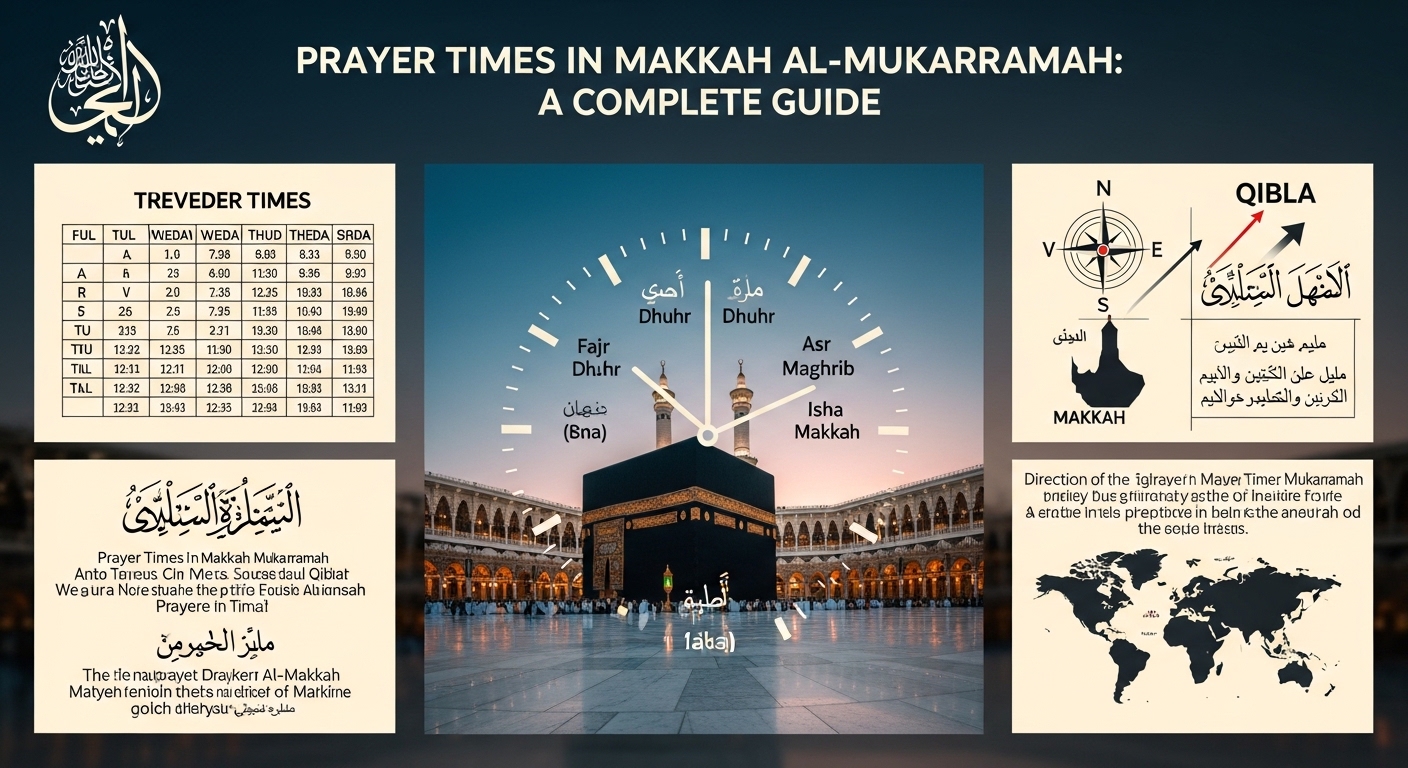
A Complete Guide
Introduction
Makkah Al-Mukarramah holds an unmatched spiritual significance for Muslims around the world. As the holiest city in Islam and the birthplace of Prophet Muhammad (peace be upon him), millions turn their hearts toward Makkah daily—both physically through pilgrimage and spiritually through prayer. For residents, pilgrims, and global Muslims planning their ibadah, understanding the prayer times of Makkah is essential. Because prayer times are tied to the movement of the sun, Makkah’s timings carry unique rhythms shaped by its geography, climate, and the centrality of the Masjid al-Haram.
The Importance of Prayer Times in Islam
The five daily prayers—Fajr, Dhuhr, Asr, Maghrib, and Isha—form the backbone of Islamic worship. Their times are divinely set according to specific solar positions, reflecting a discipline that blends spirituality with nature. In Makkah, where the Kaaba serves as the qiblah for all Muslims, the connection between time, place, and worship feels even more profound. Observing prayers at their proper times is emphasized in the Quran and Sunnah, making accurate prayer times essential for fulfilling religious duties.
Factors That Determine Makkah’s Prayer Times
Prayer times in Makkah are calculated based on astronomical movement and solar angles. Fajr begins when the first light appears on the horizon, Dhuhr when the sun passes its zenith, Asr when the afternoon shadow reaches a specific length, Maghrib immediately at sunset, and Isha after the sky becomes completely dark. Because Makkah lies close to the equator, its seasonal daylight changes are less extreme than in many other parts of the world, making its prayer schedule relatively steady year-round. The desert climate also ensures mostly clear skies, contributing to the precision of astronomical calculations used by official authorities.
Fajr: The Dawn Prayer
Fajr marks the start of each Islamic day, a time filled with serenity and spiritual renewal. In Makkah, Fajr usually occurs shortly before sunrise, shifting gradually across the year as daylight changes. This prayer symbolizes awakening—both physically and spiritually—and residents of Makkah often experience a peaceful calm during early hours when the city transitions from silence to life. Pilgrims in Masjid al-Haram often find Fajr especially moving because of the sight of the Kaaba beneath the gentle dawn light.
Dhuhr: The Midday Prayer
Once the sun reaches its peak and begins its descent, Dhuhr enters. Because Makkah’s midday sun can be intense, the Dhuhr prayer not only provides a spiritual pause but also invites physical rest from the desert heat. In earlier centuries, this break allowed workers and travelers to seek shade, and it continues to offer a moment to slow down in a city full of motion. Dhuhr in Masjid al-Haram is often one of the busiest prayers of the day as crowds gather after morning rituals like tawaf or sa’i.
Asr: The Afternoon Prayer
Asr represents the shift from the productive hours of the day toward evening. The timing depends on the shadow length, making it one of the more variable prayers. In Makkah, Asr often becomes a time for reflection as the sky begins to soften and the crowds around the Kaaba grow with pilgrims returning for late-afternoon worship. Islam emphasizes not delaying Asr, and in Makkah this prayer feels like a bridge between day and night, work and rest, effort and worship.
Maghrib: The Sunset Prayer
Maghrib begins the moment the sun disappears below the horizon. It is the shortest prayer window, and in Makkah, it is often marked by a striking sky as the city transitions into evening. The rapid shift from sunset to night feels especially dramatic in the desert environment. For pilgrims, Maghrib often blends into moments of dhikr, supplication, and evening meals, especially during Ramadan when the call to prayer signals iftar. The sound of the adhan echoing between the minarets of Masjid al-Haram during Maghrib is a moving experience for many.
Isha: The Night Prayer
Once the sky is fully dark, Isha enters, marking the close of the day’s prayer cycle. In Makkah, Isha often aligns with stillness, though thousands remain in the mosque performing late worship, reciting Quran, or resting between tawaf sessions. During Ramadan, Taraweeh follows Isha, filling the entire city with a rhythm of nightly worship. The calmness of nighttime in Makkah offers a spiritual end to the day, especially for pilgrims preparing for rest before another day of devotion.
How Prayer Times in Makkah Are Announced in Makkah
Prayer times in Makkah are regulated by the Umm Al-Qura calendar, a widely trusted standard across the Muslim world. Technological tools—mobile apps, digital billboards, and the mosque’s sound system—deliver precise timings daily. Within Masjid al-Haram, countdown screens and subtle lighting changes also signal the approaching prayer times. This synchronization ensures that millions inside and around the mosque pray in unity, creating a powerful sense of collective worship.
Seasonal Variations in Makkah’s Prayer Times
Although Makkah’s proximity to the equator moderates seasonal differences, there are still noticeable shifts throughout the year. Fajr and Isha times vary with the length of twilight, while Dhuhr remains relatively predictable. Summer brings slightly earlier Fajr and later Maghrib, while winter shortens the daylight hours. Pilgrims visiting for Hajj or Umrah often feel these changes, especially during the long, hot summer months when hydration and pacing become crucial.
Why Prayer Times in Makkah Matter Globally
Because the Kaaba is the spiritual center of Islam, Makkah’s prayer times hold symbolic importance for Muslims worldwide. Many apps and websites use Makkah’s times as a reference, and Muslims abroad often look to Makkah to align their hearts with the holy city. For pilgrims, these times guide their entire day—from tawaf schedules to rest periods—making them essential for planning a meaningful pilgrimage experience.
Conclusion
Prayer times in Makkah Al-Mukarramah are more than just astronomical calculations; they are the heartbeat of the holiest city on earth. Each prayer marks a spiritual cycle that millions join daily, whether within the sacred mosques or from afar. Understanding these times deepens one’s appreciation of Islamic worship and enhances the experience of anyone living in or visiting Makkah. Rooted in the movements of the sun yet elevated through acts of devotion, Makkah’s prayer schedule stands as a timeless reminder of the unity and rhythm of Muslim life.