










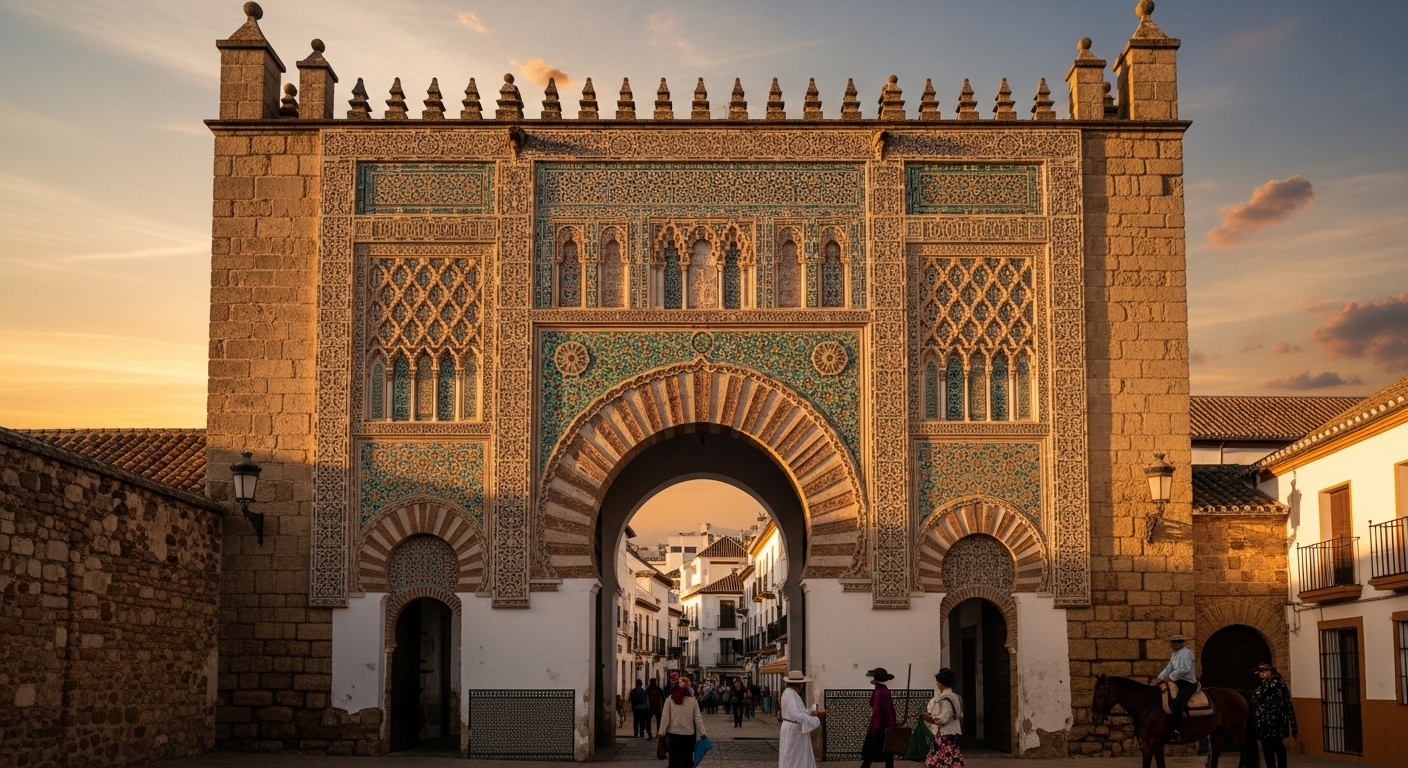
The Andalusian Gate
The Andalusian Gate is a term that evokes a blend of history, artistry, and cultural identity deeply rooted in the legacy of Al-Andalus. Whether used metaphorically or in architectural contexts, it represents a magnificent fusion of Islamic and Iberian influences shaped over centuries in southern Spain. The imagery of an Andalusian gate immediately suggests carved arches, warm earth-toned stone, interlacing geometric patterns, and an atmosphere charged with stories of civilizations that flourished across the Iberian Peninsula. Exploring this concept is not just a journey into architectural technique but also a look at the symbolic weight such gates carry—gateways to knowledge, transitions between eras, and signatures of a multicultural past that still resonates in the aesthetic language of Spain today.
A Historical Identity Woven Into Stone
The essence of the Andalusian Gate reaches back into the era of Al-Andalus, a time when Andalusia was known for its scholarship, scientific advancement, and architectural brilliance. Gates served not only as defensive structures but also as ceremonial entrances that showcased the power, taste, and spiritual worldview of the rulers who commissioned them. They were the first impression of a city or fortress—an intentional blend of form and symbolism. The blend of Arabic calligraphy, horseshoe arches, and symmetrical stonework became the signature of a society where artistry was both deeply refined and spiritually inspired. Even today, the traces of this aesthetic define the iconic imagery associated with Andalusian culture.
Architectural Features That Define the Andalusian Aesthetic
An Andalusian gate often reflects a series of architectural elements that distinguish it from other regional styles. Most iconic among them is the horseshoe arch, a hallmark of Moorish architecture. This elegant curve, sometimes slim and sometimes exaggerated, creates a sense of openness and grandeur. Another defining feature is the intricate geometric patterning that represents the mathematical precision characteristic of Islamic art. These designs were crafted not merely for decoration but also for philosophical reasons, symbolizing the infinite nature of creation. Stucco carvings, tile mosaics, and wooden latticework add layers of texture and depth, transforming a simple gateway into an immersive artistic statement.
Cultural Fusion: Where Traditions Meet
One of the most captivating aspects of the Andalusian Gate is the unmistakable fusion of cultures it represents. Over centuries, the region experienced waves of Roman, Visigothic, Islamic, and Christian influences, each leaving marks on architecture and design. When Spain transitioned from Islamic rule to Christian kingdoms, many structures were preserved, repurposed, or incorporated into new architectural visions. This blend created unique hybrid designs—Christian symbols carved into Moorish arches or Islamic geometric patterns framing later Renaissance details. This cultural layering is what makes the Andalusian style distinct: it is not one culture overshadowing another, but a conversation between eras recorded in stone.
Symbolism Beyond Physical Structure of Andalusian Gate
Gates have always held symbolic meaning in human history—they represent thresholds, beginnings, protection, and transition. The Andalusian Gate carries even deeper symbolic weight because of its cultural background. For some, it represents the golden age of intellectual flourishing in Al-Andalus; for others, it is a reminder of cultural coexistence and shared heritage. To modern historians and artists, the concept sparks creative interpretation: the gate becomes a metaphor for dialogue between civilizations, a reminder of the value of multicultural influence, or a poetic representation of a vanished past whose beauty still resonates.
The Andalusian Gate in Modern Architecture
Today, the influence of Andalusian architecture can be found well beyond Spain. Modern designers often incorporate elements of the Andalusian Gate into homes, public spaces, and urban developments around the world. From arched entrances in Mediterranean-style villas to Moorish-inspired courtyards in luxury resorts, the aesthetic continues to inspire. What makes it so appealing in contemporary architecture is its ability to evoke elegance while maintaining a feeling of warmth and hospitality. The arches soften rigid lines, the ornamentation adds personality, and the overall design creates a sense of timelessness that many modern structures lack.
A Gateway to Cultural Memory
Thinking of the Andalusian Gate as a passage into cultural memory reveals another layer of significance. Andalusia’s history is a tapestry of stories—of scholars who translated ancient texts, poets who shaped early European literature, craftsmen whose artistry still inspires awe, and communities who lived side-by-side despite differences. The gate becomes a symbolic entry point into that world. It invites us to reflect on how cultural exchange enriches societies and how architecture can preserve memory even when centuries pass. Every carved line, every arch, and every decorative tile is a whisper from the past, insisting that beauty transcends time.
Touristic and Educational Appeal
Even as a conceptual symbol, the Andalusian Gate continues to attract the imagination of travelers, students, and historians. Regions influenced by Andalusian design draw millions of visitors each year who come seeking the charm of ancient architecture and the soothing geometry of Moorish artistry. While a specific “Andalusian Gate” may not always exist as a singular landmark, the idea is embodied in numerous architectural elements throughout southern Spain. For many tourists, encountering such gates feels like stepping into a living museum. They offer not only Instagram-worthy visuals but also a firsthand look at a heritage shaped by unity and diversity.
A Source of Artistic Inspiration from Andalusian Gate
Writers, painters, filmmakers, and designers often turn to Andalusian architecture for inspiration, using the gate as a motif in storytelling and visual art. Its striking curves and mysterious aura lend themselves perfectly to narratives about lost kingdoms, forbidden gardens, or cultural crossroads. Artists interpret the gate as a symbol of mystery, romance, or historical depth. In literature, it might serve as a metaphor for opening one’s mind to new ideas; in film, as a dramatic backdrop suggesting richness and depth; and in art, as a focal point capturing intricate detail and emotional resonance.
Preservation of Heritage and Identity
Preserving architectural traditions connected to the Andalusian Gate is a commitment to protecting cultural identity. Governments and conservation organizations across Spain invest heavily in restoring and maintaining ancient structures influenced by Andalusian design. This effort ensures that future generations can continue to experience the beauty and complexity of their past. These preservation projects also highlight the role architecture plays in shaping a region’s identity—tourism thrives, local pride grows, and historical education flourishes when such cultural treasures are safeguarded.
Why the Andalusian Gate Still Matters
In a world where modern architecture often prioritizes efficiency over artistry, the Andalusian Gate stands as a reminder of the importance of cultural expression. It tells us that architecture can be both functional and poetic, that design can be a bridge between worlds, and that beauty can preserve stories long after empires fade. Whether viewed as an artistic form, a historical symbol, or a metaphorical passage, the Andalusian Gate continues to matter because it embodies the timeless human desire to create, remember, and connect.
Conclusion of Andalusian Gate
The Andalusian Gate is much more than an architectural form—it is a symbol of history, artistry, and cultural harmony. It captures the spirit of a region shaped by diverse civilizations and reflects the enduring power of beauty crafted with intention and meaning. By exploring its features, symbolism, and influence, we gain deeper appreciation for the legacy of Al-Andalus and the ways in which its architecture continues to inspire modern design and cultural imagination. The Andalusian Gate stands not only as a tribute to the past but also as an open invitation to learn, reflect, and celebrate the rich tapestry of human history.