










Meaning, Usage, and Real-World Examples
The English word “deal” is one of the most flexible and widely used terms in everyday conversation. You can hear it during business negotiations, casual chats, shopping trips, and even quick decisions with friends. But translating the word into Spanish isn’t as simple as choosing one direct equivalent. Spanish uses several different words depending on the context, each carrying a unique shade of meaning. Understanding how to use the right Spanish version of “deal” helps you communicate more clearly, sound more natural, and express your ideas with confidence. In this article, we’ll explore the journey of the word “deal,” how it transforms across contexts, and how Spanish handles each meaning with precision.
The Journey of the Word “Deal”
In English, “deal” has evolved over centuries. Historically linked to distribution and negotiation, it gradually expanded into a versatile expression covering agreement, acceptance, value, and exchange. Over time, people began using “deal” not only in business but also in casual everyday interactions. Spanish, however, keeps words more tightly connected to context. Instead of stretching one term across many ideas, it breaks down each meaning into a specific and clear vocabulary choice. This linguistic approach allows Spanish speakers to convey exactly what kind of “deal” they mean without confusion. The result is a set of words—acuerdo, trato, oferta, negocio, ganga—that together cover every angle of the English “deal.”
Introduction to the Different Forms of Deal in Spanish
If you’ve ever heard someone say “Deal!” after agreeing to something, or “I got a great deal today!” after shopping, you already know how flexible the word can be. Spanish speakers don’t rely on one blanket term. Instead, they choose from several precise options. This is what makes Spanish both expressive and beautifully organized. Words like acuerdo and trato help seal agreements. Terms like oferta and ganga celebrate bargains. Meanwhile, negocio handles the world of business and formal transactions. Each one has its own purpose, tone, and personality. Once you understand when to use them, expressing the word “deal” in Spanish becomes easy and natural.
Acuerdo — The Classic Translation for Agreement
When English speakers talk about making or having a deal, the Spanish word acuerdo is often the closest match. It refers to an agreement reached by two or more people. This can happen in formal or informal situations, making acuerdo one of the most versatile choices.In everyday interactions, you might use acuerdo when settling on a decision with a friend or planning something together. In legal or business environments, acuerdo still holds strong, appearing in contracts, meetings, and negotiations. It represents harmony, mutual understanding, and completed decision-making. If you’re ever unsure which Spanish word to use for “deal,” acuerdo is a safe starting point.
Trato — The Friendly, Everyday Deal
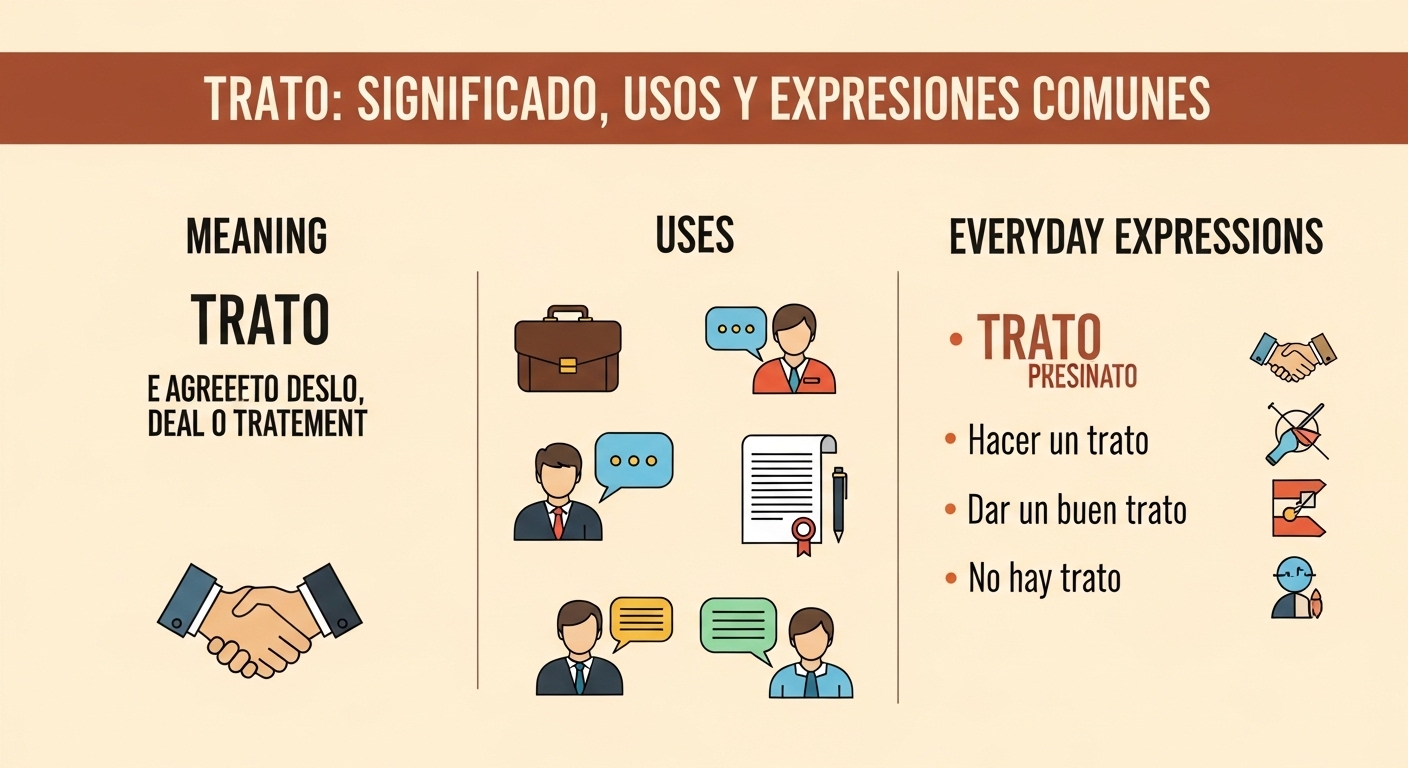
While acuerdo works well for general agreements, the Spanish word trato adds a layer of friendliness and intimacy. It’s commonly used when two people verbally seal a plan or arrangement. If you want to say “Deal!” in a cheerful, quick way, ¡Trato hecho! is the perfect expression.This word brings a warm, personal tone to the conversation. It feels more like a handshake between friends than a formal contract. Whether you’re agreeing to swap shifts with a coworker, settling on a price at a small market, or making a promise to someone, trato fits effortlessly into the situation. It’s often used in informal verbal agreements where trust matters more than paperwork.
Oferta — The Deal You See in Stores
When “deal” refers to price reductions, promotions, or discounts, the Spanish translation becomes oferta. This word is widely used in advertising, shopping, and sales environments. Anytime you come across a sale sign in a Spanish-speaking country, you’ll usually find the word oferta printed boldly on it.Oferta highlights good prices, bundle deals, seasonal sales, and special promotions. Whether it’s Black Friday, a holiday sale, or a weekend discount, oferta signals value and savings. If you’re talking about catching a good deal at a store, this is the word that fits naturally. It’s universal across all Spanish-speaking regions, making it an essential part of shopping vocabulary.
Negocio — The Formal Business Deal
In professional or corporate settings, the correct Spanish word for “deal” is negocio. This term refers to business transactions, commercial exchanges, financial agreements, and partnerships. When companies negotiate terms, close a contract, or discuss investments, they are engaging in a negocio.This word carries a tone of professionalism and structure. It is often used when describing deals involving money, resources, or business strategy. Whether a company is signing a merger, finalizing an investment, or discussing market opportunities, negocio communicates the formal and official nature of the transaction. This is the term that captures the seriousness and responsibility associated with the business world.
Ganga — The Deal That’s Too Good to Mss
Sometimes a “deal” is unbelievably good—a real steal. That’s when Spanish speakers use the word ganga. This term highlights excitement, value, and the thrill of finding something much cheaper than expected.Ganga is usually used in casual conversations, especially when someone wants to brag about a great find. For example, if someone bought an expensive item at a surprisingly low price, they might say it was a ganga. This word carries a sense of joy and surprise, making it perfect for enthusiastic storytelling about bargain shopping or lucky discoveries.
Everyday Expressions Using Deal in Spanish
Because “deal” has so many uses in English, Spanish uses different expressions to capture each meaning. Here are some common examples:
-
“Deal with it.” → Lidia con eso.
-
“We have a deal.” → Tenemos un acuerdo.
-
“Deal!” → ¡Trato hecho!
-
“That’s a great deal.” → Esa es una gran oferta.
-
“What’s the deal?” → ¿Qué está pasando?
-
“It’s no big deal.” → No es gran cosa.
-
“They closed the deal.” → Cerraron el negocio.
These phrases show how Spanish adapts meaning based on context rather than using a single word.
Choosing the Right Spanish Word for “Deal”
To simplify all these meanings, here’s a quick guide:
-
Use acuerdo when talking about general agreements or mutual decisions.
-
Choose trato when the deal is casual, friendly, or personal.
-
Say oferta when referring to sales or shopping deals.
-
Use negocio for business transactions.
-
Choose ganga when describing an amazingly good bargain.
These categories help you pick the right word instantly in any situation.
Regional Use Across Spanish-Speaking Countries
Spanish is spoken across many cultures, and each region adds its own flavor. While the main words remain the same, some are more common in certain places. For example, ganga is widely used in South America when spotting a bargain. Trato hecho is popular in Mexico during casual agreements. In Spain, acuerdo is especially common in both formal and informal settings. Understanding these cultural preferences helps you sound even more natural.
Real-Life Situations and Examples of Deal in Spanish
Imagine you’re making plans with a friend. If they suggest meeting at 7 PM and you agree, you can respond with trato hecho. If you’re discussing a business partnership, you’d talk about cerrar un negocio. While shopping, you might celebrate a Black Friday oferta or call something a ganga if it’s surprisingly cheap. If you’re agreeing to a compromise, you’d say that both of you reached an acuerdo. Each situation highlights how Spanish provides the perfect word for every version of “deal.”
Conclusion of Deal in Spanish
Translating “deal” into Spanish isn’t about choosing a single word—it’s about choosing the right one. Spanish divides the flexible English term into several precise expressions that describe agreements, bargains, transactions, and value. Words like acuerdo, trato, oferta, negocio, and ganga help capture every nuance of the idea behind “deal.”
Understanding when to use each one not only improves your vocabulary but also deepens your grasp of how Spanish speakers view agreements and exchanges. With these words in your toolkit, you’ll be ready to navigate conversations, negotiations, and shopping trips effortlessly—no matter what kind of “deal” comes your way.