









Introduction
The cell cycle is one of the most fundamental processes in biology, allowing living organisms to grow, develop, and reproduce. It refers to the series of events that a cell goes through as it grows and divides into two daughter cells. This process is essential for maintaining life, repairing tissues, and ensuring genetic continuity across generations. The study of is a key part of Cell Biology and provides insights into how organisms function at a microscopic level.
What is the Cell Cycle?
is a structured sequence of stages that a cell passes through to duplicate its contents and divide. It ensures that each new cell receives an exact copy of the genetic material. The cycle is highly regulated to prevent errors, which could lead to serious issues such as mutations or diseases.
Main Phases of the Cell Cycle
Interphase: The Preparation Stage
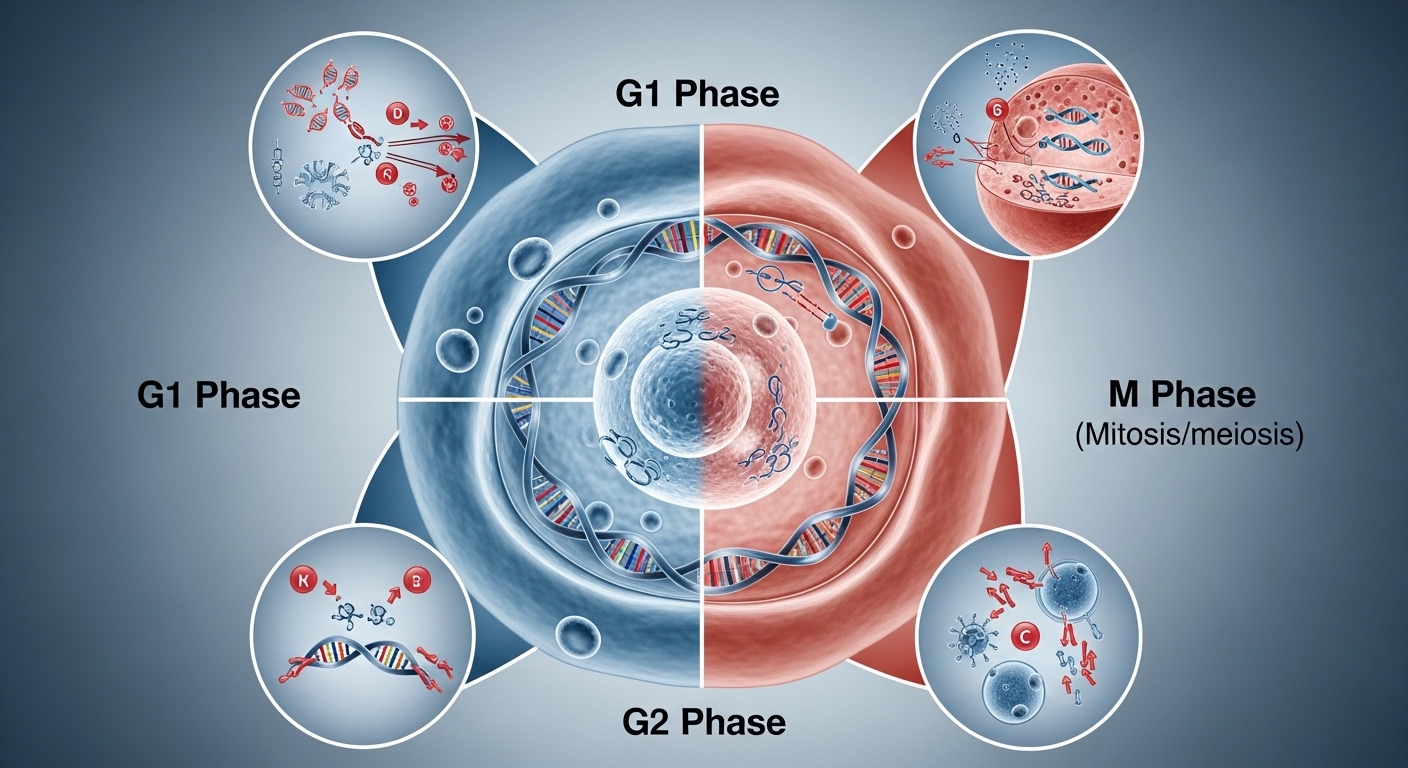
Interphase is the longest phase of the cell cycle, during which the cell prepares for division. It is divided into three subphases:
G1 Phase (Growth Phase)
In this stage, the cell grows in size, produces proteins, and carries out normal metabolic functions. It is a period of intense activity where the cell prepares for DNA replication.
S Phase (Synthesis Phase)
During the S phase, the cell replicates its DNA. This ensures that each daughter cell will have a complete set of genetic information.
G2 Phase (Second Growth Phase)
In the G2 phase, the cell continues to grow and prepares for division by producing necessary proteins and organelles. It also checks for any DNA errors before proceeding.
M Phase: Cell Division
The M phase is where the actual division occurs. It includes two main processes:
Mitosis
Mitosis is the division of the nucleus, where duplicated chromosomes are separated into two identical sets. This process is crucial for growth and tissue repair.
Cytokinesis
Cytokinesis is the division of the cytoplasm, resulting in two separate daughter cells. Each cell contains the same genetic material as the original parent cell.
Regulation of the Cell Cycle
The cell cycle is controlled by a complex system of signals and checkpoints. These checkpoints ensure that each phase is completed accurately before the next one begins. Proteins such as cyclins and cyclin-dependent kinases (CDKs) play a major role in regulating the cycle.
If errors are detected, the cell cycle can be paused to allow for repair. In some cases, if the damage is too severe, the cell may undergo programmed cell death, also known as Apoptosis.
Importance of the Cell Cycle
Growth and Development
The cell cycle allows organisms to grow from a single cell into complex multicellular beings. It is essential during embryonic development and throughout life.
Tissue Repair
When tissues are damaged, the cell cycle enables the production of new cells to replace the damaged ones.
Reproduction
In unicellular organisms, is a means of reproduction. In multicellular organisms, it supports the production of specialized cells.
Cell Cycle and Disease
Cancer and Uncontrolled Division
When the regulation of the cell cycle fails, cells may divide uncontrollably, leading to cancer. This is often caused by mutations in genes that control the cycle.
Genetic Disorders
Errors during DNA replication or division can lead to genetic abnormalities, which may result in inherited diseases or developmental issues.
Differences Between Mitosis and Meiosis
Mitosis
- Produces two identical daughter cells
- Maintains the same chromosome number
- Used for growth and repair
Meiosis
- Produces four genetically different cells
- Reduces chromosome number by half
- Used for sexual reproduction
Checkpoints in the Cell Cycle
G1 Checkpoint
Determines whether the cell is ready to replicate DNA.
G2 Checkpoint
Ensures that DNA replication has been completed correctly.
M Checkpoint
Confirms that chromosomes are properly aligned before separation.
These checkpoints are crucial for maintaining the integrity of the cell’s genetic material.
Conclusion
The cell cycle is a highly organized and tightly regulated process that is essential for life. From growth and development to tissue repair and reproduction, it plays a critical role in maintaining the stability and functionality of living organisms. Understanding the cell cycle not only helps us appreciate the complexity of life but also provides valuable insights into diseases such as cancer. As research in Cell Biology continues to advance, our knowledge of will further improve, leading to better medical treatments and scientific breakthroughs.