







1. Introduction: The Green Metropolis
Nestled against the backdrop of the Margalla Hills. Islamabad is frequently cite as one of the most beautiful capital cities in the world. Its defining characteristic is its pervasive greenery. Unlike the dense, vertical urban jungles of the West or the historic. Bustling labyrinths of Lahore and Karachi, Islamabad designe to breathe. Wide, tree-lined avenues like Jinnah Avenue and Constitution Avenue bisect the city, creating a grid-like structure that is as logical as it is scenic.
The city serves as the administrative heart of the country. But its soul lies in its quietude. For the traveler or the resident, the experience of Islamabad is one of “slow living” amidst high-speed development. From the hiking trails of Trail 3 and 5 that offer panoramic views of the Rawal Lake to the manicured lawns of Shakarparian. the city remains a testament to the idea that urban life does not have to come at the expense of the environment.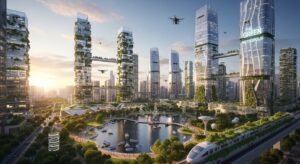
Islamabad: The Confluence of Modernity, Nature, and Global Diplomacy
Islamabad is more than just a capital city; it is a carefully curated statement of Pakistan’s national identity. While many global capitals evolved organically over centuries, Islamabad was carved out of the Potohar Plateau in the 1960s with a specific vision of symmetry, order, and harmony with nature. Today, it stands as a unique metropolis that balances its role as a serene residential haven with its growing importance as a high-stakes arena for international mediation.
2. The Blueprint: Modernism and the Master Plan
The city’s existence is the result of a grand architectural experiment. In 1960, the Greek architect Constantinos Apostolou Doxiadis was commission. To design a city that would replace Karachi as the capital. His “Dynapolis” concept was rooted in the principles of modernism—functionality, scalability, and separation of sectors.
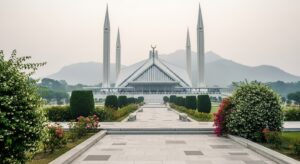
Islamabad is divide into sectors (E, F, G, H, and I). Each functioning as a self-contained unit with its own commercial markets (Markaz), parks, and mosques. This “Blueprint of Order” was intend to prevent the haphazard urban sprawl seen in other South Asian cities. The architecture within this grid is equally deliberate. Ranging from the brutalist structures of the Secretariat to the iconic Faisal Mosque. The mosque, devoid of traditional domes and instead mimicking a desert tent. Remains a global symbol of Islamic modernism and Islamabad’s forward-looking spirit.
3. The Internal Beauty of Islamabad: Spiritual and Cultural Anchors
Beyond the grid and the concrete lies the “Internal Beauty” of the city. Collection of spiritual and historical anchors that give Islamabad its character. This beauty is found in the quiet corners that predate the modern capital or provide a sanctuary for its residents.
-
The Spiritual Heart at Bari Imam: Tucked away near the Diplomatic Enclave is the shrine of Hazrat Bari Imam, the patron saint of Islamabad. The internal beauty here is found in the devotion of thousands who visit, creating a spiritual atmosphere that stands in stark contrast to the nearby government offices.
-
The Ancient Whispers of Shah Allah Ditta: On the western edge of the city lie the 2,400-year-old Buddhist caves. This site represents the deep, historical internal beauty of the land, reminding visitors that this plateau has been a sanctuary for meditation and peace for millennia.
-
Saidpur Village: A “living museum” where a Hindu temple, a Sikh gurdwara, and an Islamic mosque stand in close proximity. This visual representation of religious pluralism is the core of Islamabad’s cultural internal beauty, showcasing a heritage of coexistence.
-
The Silence of F-9 Park: At sunset, the internal beauty of the city is best experienced in Fatima Jinnah Park. As the call to prayer echoes from the Faisal Mosque, the vast green expanse offers a moment of reflection that is rare in a national capital.
4. Today’s News of Islamabad
As of April 20, 2026, Islamabad is currently the center of intense national and international attention. The city’s “Red Zone,” which houses the most sensitive government buildings and luxury hotels, has been strategically managed to ensure the safety of high-profile foreign visitors.
The District Administration, led by Deputy Commissioner Irfan Nawaz Memon, has overseen the deployment of over 10,000 security personnel across the capital. While federal ministries have transitioned to a “work-from-home” model today.The city remains functional, with educational institutions remaining open outside the cordoned areas. The atmosphere is one of high-stakes anticipation as the city prepares to host a potential historic summit that could redefine regional security.
5. Role of Islamabad in the Ceasefire of Iran
Perhaps the most significant development in Islamabad’s history is its recent emergence as the primary mediator in the 2026 Iran-U.S. conflict. While the city has always been a diplomatic hub, its role over the last few weeks has elevated it to a “global peacemaker.”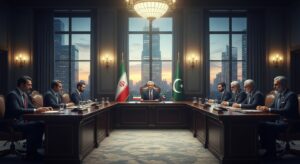
Following a period of intense military escalation, Pakistan leveraged its unique position to broker a temporary ceasefire on April 8, 2026. This achievement led to the “Islamabad Talks,” the first direct, high-level, in-person engagement between Washington and Tehran in decades. The mediation efforts have been led by a high-powered team including Prime Minister Shehbaz Sharif and Field Marshal Asim Munir. The city’s neutrality and its ability to provide a secure, controlled environment have made it the only venue acceptable to both sides. Placing the future of regional stability squarely on the shoulders of the diplomats meeting in the shadow of the Margallas.
6. The Aesthetic of the Elite: Fashion and Grooming
In the modern sectors of F-6 and F-7, a different kind of beauty thrives. Islamabad has become a sanctuary for high-fashion digital art and premium grooming. The city’s youth are redefining the Pakistani aesthetic, blending tailored traditional kurtas with luxury accessories and clean-cut, sophisticated grooming.
This cultural shift is supported by a burgeoning scene of hyper-realistic digital photography and cinematic content creation. Where the city’s minimalist architecture and natural lighting provide the perfect backdrop. The Islamabad Fashion Week and the various artisanal markets have turned the city into a trendsetter for refined, modern living.
7. Conclusion: The Enduring Legacy of the Capital
As Islamabad moves further into 2026, it faces the challenge of maintaining its “Green Metropolis” identity. while growing into its new role as a heavyweight in international diplomacy. Whether it is through its innovative urban planning, its deep-rooted spiritual sites. or its pivotal role in preventing regional conflict, Islamabad continues to be a city of quiet power. It is a place where the stillness of the hills meets the urgency of the world stage, proving that a city built on a master plan can still possess a deep, evolving soul.