








The Amazon Empire
Amazon Empire in 1994, a former Wall Street hedge fund executive named Jeff Bezos drove across the United States from New York to Seattle. During that road trip, he wrote the business plan for a company that would change the fabric of global commerce, technology, and daily life forever. Originally operating out of a humble garage, that company—Amazon—began with a singular, focused mission: to sell books online.
Today, Amazon is no longer just an online bookstore. It is a multi-trillion-dollar conglomerate, a logistics miracle, a pioneer in cloud computing, a dominant force in digital entertainment, and an artificial intelligence powerhouse. To understand the modern global economy is to understand Amazon.
This article explores the rise of Amazon, the pillars that support its massive ecosystem, its disruptive impact across industries, the controversies it faces, and where the titan is heading next.
1. The Genesis: From Books to the “Everything Store”
When Jeff Bezos chose books as Amazon’s first product category, it wasn’t out of a passion for literature; it was a highly calculated decision. Books were easy to package, didn’t spoil, and had a massive global inventory that no physical bookstore could ever fully stock.
The Early Days and the Dot-Com Crash
Amazon Empire went public in 1997, long before it ever turned a profit. Bezos famously preached a philosophy of “Day 1″—a mindset that treats every day as if the company is still a startup, prioritizing long-term market dominance over short-term quarterly profits. This radical long-term thinking allowedAmazon Empire to survive the devastating dot-com crash of 2000, a bubble that burst and destroyed hundreds of its contemporary e-commerce rivals.
Expanding the Horizon
Once the infrastructure for selling books was perfected, Bezos executed his broader vision: creating the “Everything Store.” Amazon rapidly expanded into:
-
Music and videos (1998)
-
Consumer electronics, toys, and games (1999)
-
The Amazon Marketplace (2000), allowing third-party sellers to list products alongside Amazon’s own inventory.
The Marketplace was a turning point. Instead of competing with small businesses, Amazon invited them into its ecosystem, taking a cut of every sale and instantly multiplying its product catalog exponentially.
2. The Core Pillars of Amazon’s Business Model
Amazon’s dizzying array of businesses can be overwhelming, but its core success relies on a concept Bezos called the “Flywheel Effect” (or the Virtuous Cycle). The logic is elegant: lower prices attract more customers. More customers attract more third-party sellers. More sellers lead to a larger selection, which improves the customer experience, drawing even more traffic. This growth lowers Amazon’s cost structure, allowing it to cut prices further, spinning the flywheel faster.
       [ Lower Prices ] <------ [ Lower Cost Structure ]
              |                             ^
              v                             |
    [ Customer Experience ]             [ Growth ]
              |                             ^
              v                             |
        [ Traffic ] ---> [ Sellers ] -------+
To keep this flywheel spinning, Amazon relies on three primary, intertwined pillars.
Pillar 1: Amazon Prime and Logistics
Introduced in 2005, Amazon Prime started as a risky loyalty program offering unlimited two-day shipping for a flat annual fee. Critics thought it would bankrupt the company on shipping costs. Instead, it created psychological lock-in. Prime members, wanting to get their money’s worth, stopped shopping anywhere else.
To fulfill the Prime promise, Amazon built a world-class logistics network:
-
Fulfillment Centers: Massive, robot-assisted warehouses strategically placed near major metropolitan areas.
-
Amazon Logistics (AMZL): A proprietary fleet of delivery vans, planes (Amazon Air), and long-haul trucks that reduced dependence on traditional carriers like FedEx and UPS.
-
Same-Day and Next-Day Delivery: Driven by predictive algorithms that anticipate what consumers will buy and ship items to local hubs before the order is even placed.
Pillar 2: Amazon Web Services (AWS)
While consumers know Amazon for cardboard boxes, the engine that powers its massive profits is hidden in the cloud. Launched in 2006, Amazon Web Services (AWS) grew out of the company’s internal need to manage its own chaotic computing infrastructure.
Realizing that other companies faced the same IT struggles, Amazon began renting out virtual servers, storage, and databases. Today, AWS is the undisputed leader in cloud computing, powering everything from Netflix and Airbnb to government agencies. Because cloud computing operates on high profit margins, AWS effectively subsidizes Amazon’s capital-intensive, lower-margin retail operations.
Pillar 3: Amazon Empire Marketplace and Advertising
Amazon is no longer just a retailer; it is a digital landlord. Over 60% of the items sold on Amazon come from independent third-party merchants. Amazon charges these merchants referral fees, fulfillment fees (Fulfillment by Amazon, or FBA), and increasingly, advertising fees.
Because hundreds of millions of consumers start their product searches directly on Amazon rather than Google, Amazon has quietly built one of the largest digital advertising platforms in the world, allowing brands to bid for top placement in search results.
3. Disruption Across Industries: Beyond E-Commerce
Amazon’s playbook involves entering a fragmented or stagnant industry, applying its technological prowess and scale, and completely disrupting the incumbents.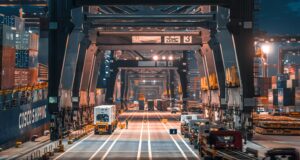
Groceries and Brick-and-Mortar: Whole Foods and Just Walk Out
For years, grocery shopping remained resistant to e-commerce. Amazon attacked this problem from two angles:
-
Acquisition: In 2017, Amazon bought Whole Foods Market for $13.7 billion, instantly gaining hundreds of physical storefronts and a premium supply chain.
-
Innovation: Amazon introduced “Just Walk Out” technology via Amazon Go stores, utilizing computer vision, sensor fusion, and deep learning to eliminate checkout lines entirely.
Entertainment and Media: Prime Video and MGM
To keep Prime subscriptions indispensable, Amazon entered the streaming wars. Prime Video transitioned from a repository of licensed movies into an award-winning studio creating original content (The Marvelous Mrs. Maisel, The Lord of the Rings: The Rings of Power). The acquisition of the historic MGM Studios further cemented Amazon’s footprint in Hollywood, transforming the e-commerce giant into a major media player.
Smart Home and AI: The Alexa Ecosystem
Amazon fundamentally changed how humans interact with technology by introducing the Echo smart speaker powered by Alexa, its cloud-based voice assistant. By open-sourcing Alexa’s capabilities to third-party smart home devices, Amazon established a presence in millions of households, turning voice-activated shopping and home automation into reality.
4. The Controversies and Challenges Facing the Titan
With great power comes immense scrutiny. Amazon’s unprecedented scale has made it a frequent target for regulators, labor activists, and competitors.
Labor Practices and Workplace Culture
Amazon’s fulfillment network relies on hundreds of thousands of hourly workers. The company has faced intense criticism regarding:
-
Workplace Metrics: Strict productivity algorithms and tracking software that monitor “Time Off Task (TOT),” which workers claim leave insufficient time for basic breaks.
-
Unionization: Amazon has fought aggressive legal and public relations battles against unionization efforts in its warehouses, though grass-roots movements have successfully organized in certain locations.
Antitrust and Anti-Competitive Behavior
Regulators in the United States (FTC) and the European Union have heavily scrutinized Amazon’s dual role as both a platform host and a retailer.
The Conflict of Interest: Critics argue that Amazon uses data harvested from successful third-party sellers to create its own private-label versions (such as Amazon Basics) and then ranks its own products higher in search algorithms, stifling fair competition.
Environmental Impact on Amazon Empire
Shipping billions of packages worldwide creates a massive carbon footprint. The sheer volume of cardboard waste, single-use plastics, and emissions from delivery fleets has drawn widespread environmental criticism. In response, Amazon co-founded “The Climate Pledge,” committing to reach net-zero carbon emissions by 2040 and transitioning its delivery fleet to hundreds of thousands of custom electric vehicles.
5. The Future: Where is Amazon Heading Next?
Amazon operates under the assumption that stagnation equals death. As the retail and cloud markets mature, the company is investing heavily in the next generation of societal frontiers.
| Frontier | Key Initiatives & Strategy |
| Generative AI | Moving beyond basic voice commands to integrate advanced Large Language Models (LLMs) across AWS enterprise tools and consumer Alexa devices. |
| Healthcare | Disrupting pharmaceuticals and primary care through Amazon Pharmacy and the acquisition of One Medical, aiming to make healthcare scheduling as seamless as ordering a package. |
| Satellite Internet | Launching Project Kuiper, a network of thousands of Low Earth Orbit (LEO) satellites designed to provide high-speed broadband internet to underserved communities globally. |
| Autonomous Logistics | Investing in Zoox (autonomous ride-hailing) and drone delivery (Prime Air) to completely automate the last-mile delivery system, vastly slashing shipping costs. |
6. Conclusion: The Permanent Legacy of Day 1
Amazon’s journey from a drafty Seattle garage to a global powerhouse is a testament to the power of relentless customer obsession, technological innovation, and an unwavering tolerance for operational risk. It has redefined what consumers expect from retail, transformed how businesses store and manage data, and reshaped urban logistics infrastructure.
While the company must navigate increasingly complex regulatory environments, labor dynamics, and societal responsibilities, its foundational philosophy remains intact. For Amazon, the world is always evolving, the next disruption is always around the corner, and it is always, invariably, “Day 1.”