









The Heart of Morocco’s Golden Heritage
Southwestern Morocco is home to one of the planet’s most fascinating cultural and ecological landscapes: Argan Country. Stretching across the Souss Valley, the Anti-Atlas foothills, and the coastal plains toward Agadir, this region forms the cradle of the ancient argan tree, a species found nowhere else on earth. Its deep-rooted history, unique environment, and the highly prized oil derived from its fruit have shaped the identity, livelihoods, and cultural rhythms of local Amazigh (Berber) communities for centuries. Today, Argan Country stands as a symbol of resilience—of nature, of people, and of tradition—while also becoming a celebrated global hub for sustainable beauty and wellness industries.
The Argan Country Tree: A Survivor of Time
The argan tree is a miracle of endurance. Thriving in rocky soil, harsh sunlight, and minimal rainfall, it can live for 150–200 years. Its twisted branches and deep roots anchor the land, protecting against desertification—a crucial ecological function in a region increasingly vulnerable to climate change. More than a tree, the argan represents a living archive of Morocco’s natural history, providing shade, fodder, wood, and fruit to generations of families.Its fruit holds the real treasure. Encased within a tough shell lies the kernel used to produce argan oil, an ingredient now famous worldwide. But the extraction is anything but simple: it involves cracking shells by hand, grinding kernels, and gently pressing them to release the golden oil. This manual process, unchanged for centuries, is one reason argan oil is so precious.
A Landscape Protected by UNESCO
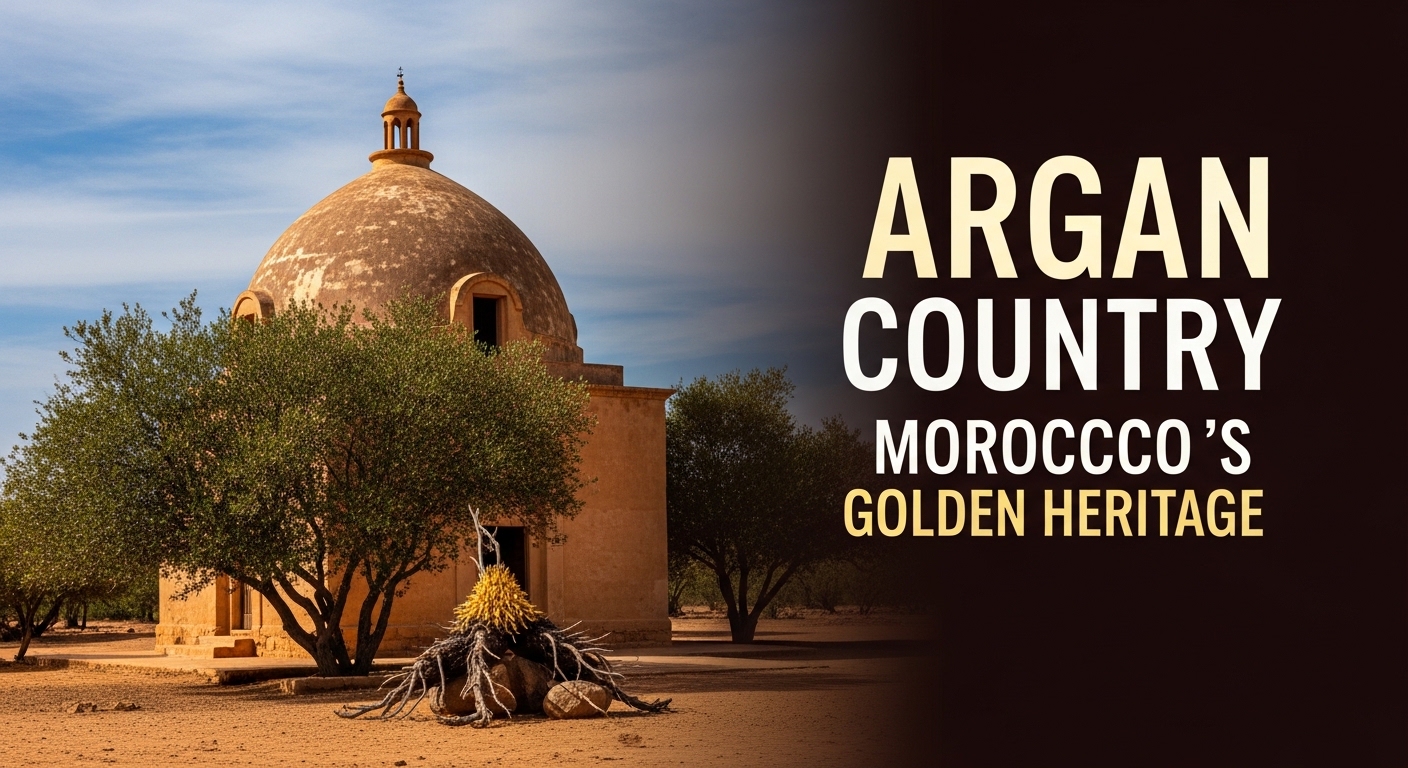
In 1998, the region known as the Arganeraie Biosphere Reserve was recognized by UNESCO. This designation acknowledges both the ecological value of the argan forest and the cultural traditions woven into it. Covering more than 2.5 million hectares, the reserve is one of the world’s last bastions of argan biodiversity.The landscapes here are incredibly diverse. Along the coast, salt-tinged breezes sweep over dunes and scrub forests. Inland, terraced fields and rocky plateaus embrace clusters of argan trees that look almost sculpted by wind. Small villages dot the terrain, their earthen houses blending into the sandy palette. The region’s beauty lies not in lush greenery but in its raw authenticity—sun-baked earth, ancient trees, and the resilience of life adapted to the extremes.
Women at the Heart of the Argan Country Story
One of the most remarkable aspects of Argan Country is the central role women play in preserving its traditions. For generations, Amazigh women have been the guardians of argan knowledge, mastering the delicate art of extracting oil from the kernels. Today, women-run cooperatives—some of which are internationally certified—have become vital engines of social development.These cooperatives do more than produce oil. They empower women with literacy programs, financial independence, and stable incomes. Many have expanded into cosmetics, culinary products, and eco-tourism services. Through this transformation, the global demand for argan oil has turned into a pathway for local women to gain recognition, autonomy, and leadership in their communities.
The World’s Most Versatile Oil
Argan oil comes in two primary forms: culinary and cosmetic. Culinary argan oil, toasted to bring out its rich, nutty flavor, is a staple in Moroccan cuisine. It elevates dishes like amlou—a decadent blend of argan oil, honey, and almonds—and enhances tagines, couscous, and fresh bread.Cosmetic argan oil, cold-pressed and lightly scented, has become a star ingredient in skincare and haircare around the world. Packed with antioxidants, vitamin E, and essential fatty acids, it moisturizes, softens, and nourishes naturally. Whether smoothing hair or rejuvenating skin, argan oil’s versatility is one reason it remains a global favorite.
Sustainability: A Delicate Balance
With rising international demand, sustainability has become a critical issue in Argan Country. Proper management of argan forests is essential to prevent overharvesting, soil depletion, and tree loss. Fortunately, many local cooperatives, government initiatives, and research organizations have implemented programs encouraging responsible farming, replanting, and regulated grazing.These measures have sparked a renewed commitment to preserving the argan tree—not just as a commercial resource, but as a symbol of Morocco’s natural heritage. Visitors today can participate in guided tours to plantations, learn about extraction methods, and see firsthand how sustainable practices protect the land and support families.
The Cultural Soul of Argan Country
Life in Argan Country retains a rhythm shaped by tradition. In rural villages, stone mills, goats climbing argan branches, and communal gatherings reflect centuries-old customs. Amazigh languages, music, and crafts—especially weaving—form the cultural soul of the region. Markets come alive with earthy colors: woven baskets, dried argan fruit, pottery, and fragrant culinary oils.Even in more developed coastal cities like Agadir, the influence of the argan tree is everywhere—local products, cosmetic shops, and restaurants celebrate it with pride. The annual Argan Festival brings artisans, cooperatives, and cultural performers together to honor the tree and promote sustainable practices.
Eco-Tourism and the Modern Traveler in Argan Country
Argan Country has quietly become a destination for travelers seeking authenticity rather than glamour. Eco-tourism lodges, guided hikes, and cultural workshops allow visitors to engage meaningfully with local life. Many guests choose to stay in village guesthouses where they can share meals, join oil-making demonstrations, or walk through argan orchards at sunrise.For photographers and nature lovers, the region offers unforgettable scenery: gnarled tree silhouettes against the desert sky, women in colorful scarves working together, goats perched playfully on branches, and golden sunsets over terraced hills. Every view feels like a window into a world shaped by nature’s rugged grace.
Challenges and the Road Ahead of Argan Country
Despite its beauty and global fame, Argan Country faces challenges. Climate change threatens rainfall patterns, increasing stress on trees already adapted to extreme conditions. Overgrazing and urban expansion place additional pressure on the fragile ecosystem. Sustained international support and local stewardship are essential to ensure the argan forests not only survive but thrive for future generations.Fortunately, awareness has grown. Many cooperatives are now Fair Trade certified, new planting initiatives have begun, and educational programs emphasize sustainable living. The region’s unique blend of environmental, cultural, and economic importance has inspired researchers, activists, and communities to work together.
A Living Heritage Worth Protecting
Argan Country isn’t just a place. It’s a story—of nature’s endurance, women’s strength, and the harmony between land and tradition. It has shaped the identity of Morocco for centuries and continues to inspire the world with its magical golden oil.To walk through its ancient groves, meet the artisans who extract every drop with care, and witness the landscape that nurtures this extraordinary tree is to understand why argan oil is more than a product—it is a heritage. And like any heritage of great value, it flourishes only when cared for, celebrated, and protected.