










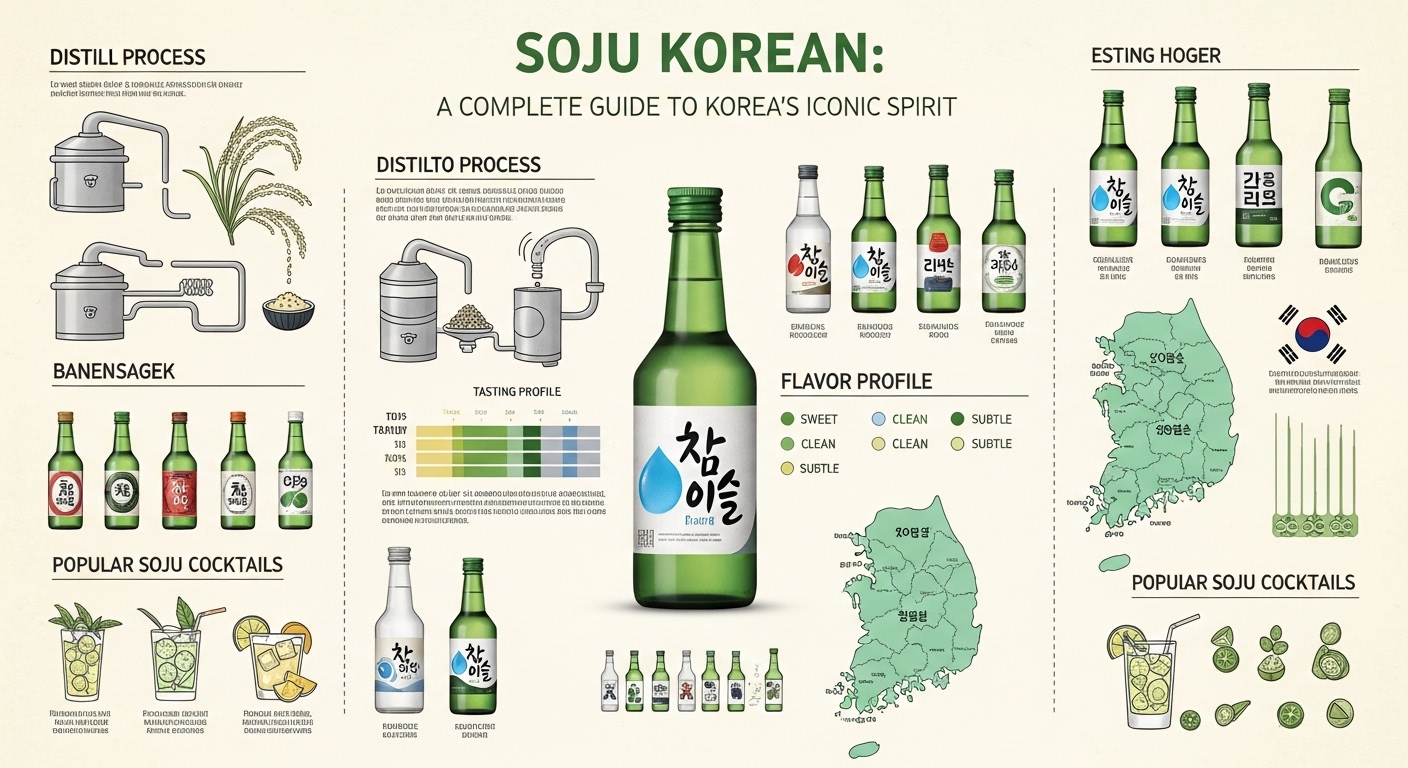
Introduction to Korean Soju
Soju Korean is one of the most famous alcoholic beverages from South Korea, known for its smooth taste, versatility, and deep cultural roots. Often compared to vodka due to its clarity, soju is typically milder in alcohol content and easier to drink, making it a favorite among both locals and international audiences. Over the years, it has become a global phenomenon, featured in Korean dramas, K-pop culture, and international bars.
What is Soju?
Soju is a clear, distilled alcoholic beverage traditionally made from rice, although modern versions may use other starches like sweet potatoes, wheat, or tapioca. It is usually served chilled and consumed in small glasses. The taste is slightly sweet and neutral, which makes it approachable even for people who are new to alcohol.
Unlike stronger spirits, soju is often enjoyed in social settings, where sharing drinks is part of the experience. Its affordability and light flavor have made it one of the best-selling spirits in the world.
The History of Soju
Origins in Ancient Korea
The history of soju dates back to the 13th century during the Mongol invasions of Korea. Distillation techniques were introduced to the Korean peninsula, leading to the creation of early forms of soju.
Evolution Over Time
Over centuries, soju evolved from a traditional rice-based spirit into a mass-produced beverage. During the 20th century, rice shortages led to the use of alternative ingredients, shaping the modern versions we see today. Today, premium varieties made with traditional methods are also gaining popularity.
How Soju is Made
Traditional Distillation
Traditionally, soju is made by fermenting rice and then distilling it to produce a clean, smooth spirit. This method results in a richer flavor and higher quality product.
Modern Production Methods
Most commercial soju today is diluted alcohol mixed with water and flavoring. This process makes it cheaper and more consistent in taste. Popular brands like Jinro have mastered this method, producing soju on a massive scale.
Alcohol Content of Soju
Typical ABV Range
Soju typically contains between 12% and 25% alcohol by volume (ABV), making it lighter than vodka but stronger than beer. This balanced strength contributes to its widespread appeal.
Light vs Strong Soju
- Light soju (12–16%): Smooth and beginner-friendly
- Standard soju (17–20%): Most common type
- Strong soju (20%+): Closer to traditional varieties
Types of Korean Soju
Classic Soju
This is the most common type, with a clean, slightly sweet taste. It pairs well with a wide range of Korean dishes.
Flavored Soju Korean
Flavored varieties, such as peach, apple, and grapefruit, are especially popular among younger drinkers. They are sweeter and easier to drink.
Premium Soju
Premium soju is made using traditional distillation methods and high-quality ingredients. These versions often have a richer and more complex flavor profile.
Soju in Korean Culture
Drinking Etiquette
In Korean culture, drinking soju is more than just consuming alcohol—it’s a social ritual. There are specific customs, such as:
- Pouring drinks for others instead of yourself
- Using both hands when giving or receiving a drink
- Turning away slightly when drinking in front of elders
These traditions reflect respect and strengthen social bonds.
Role in Social Life of Soju Korean
Soju plays a central role in gatherings, celebrations, and even business meetings. It helps break the ice and fosters a sense of connection among people.
How to Drink Soju Korean
Traditional Way
Soju is usually served straight in small shot glasses. It is sipped rather than quickly consumed, allowing you to enjoy its smooth taste.
Popular Mixes
Soju is also used in cocktails, such as:
- Somaek (soju + beer)
- Soju cocktails with fruit juices or soda
These combinations make it even more versatile and enjoyable.
Global Popularity of Soju
Rise Through Pop Culture
The global rise of Korean entertainment, including K-dramas and K-pop, has significantly boosted soju’s popularity. Fans often see their favorite celebrities enjoying soju, which sparks curiosity and interest worldwide.
International Markets
Soju is now widely available in many countries and is increasingly featured in bars and restaurants. Its approachable taste and lower alcohol content make it appealing to a global audience.
Health and Moderation
Is Soju Healthy?
Like any alcoholic beverage, soju should be consumed in moderation. While it is lower in alcohol than many spirits, excessive consumption can still have negative health effects.
Tips for Responsible Drinking
- Drink slowly and stay hydrated
- Eat food while drinking
- Know your limits
Conclusion of Soju Korean
Korean soju is more than just a drink—it’s a symbol of culture, tradition, and social connection in South Korea. With its smooth flavor, moderate alcohol content, and rich history, it continues to captivate people around the world. Whether enjoyed straight, mixed, or as part of a social gathering, soju offers a unique experience that reflects the heart of Korean lifestyle.