










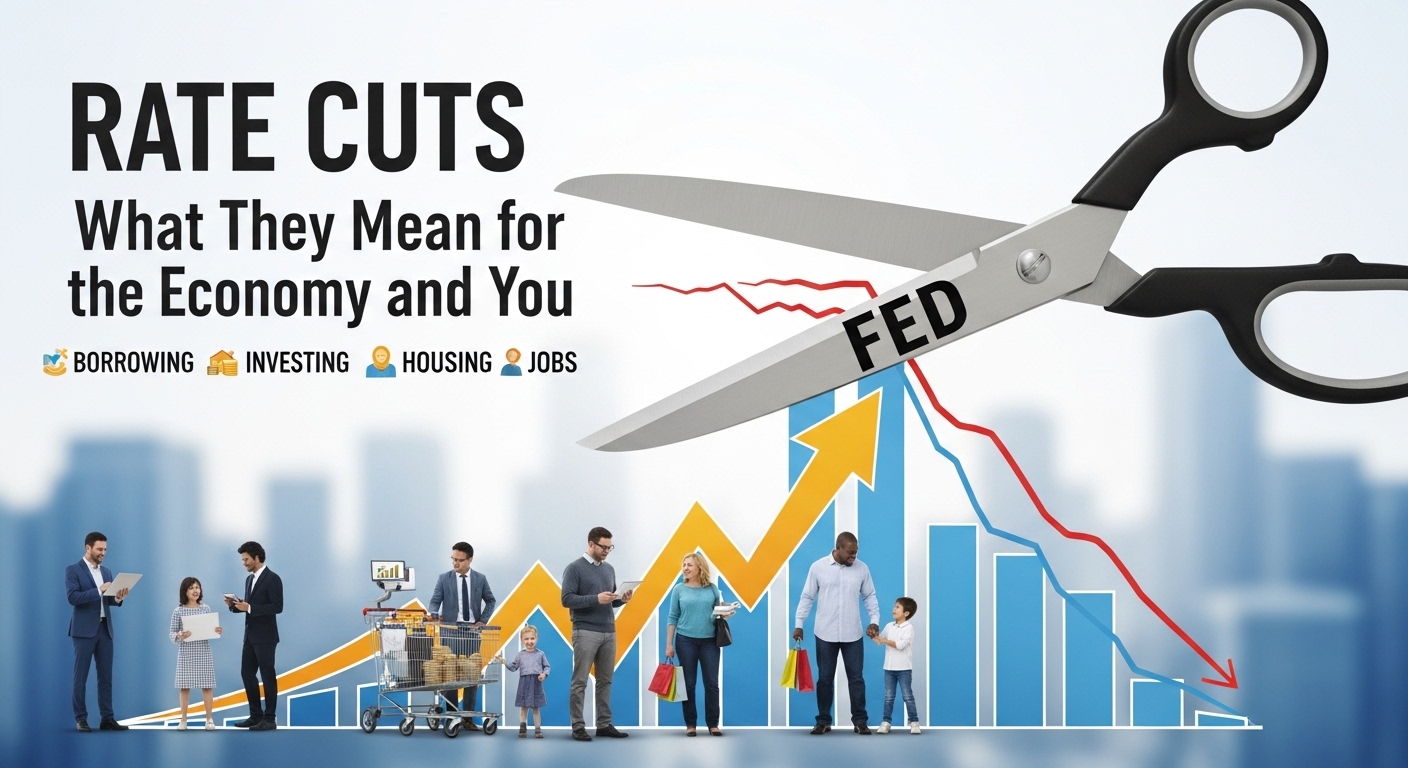
Introduction: Understanding Fed Rate Cuts
Fed rate cuts refer to decisions by the Federal Reserve (often called “the Fed”) to lower its benchmark interest rate, known as the federal funds rate. This rate influences borrowing costs across the entire economy—from mortgages and car loans to business investments and credit cards. When the Fed cuts rates, it’s typically trying to stimulate economic growth, encourage spending, and prevent or respond to economic slowdowns.
What Is the Federal Funds Rate?
The federal funds rate is the interest rate at which banks lend money to each other overnight. While it might sound technical, it plays a crucial role in shaping broader financial conditions. When the Fed lowers this rate, banks can borrow more cheaply, and in turn, they often pass on those lower costs to consumers and businesses.
The rate is set by the Federal Open Market Committee (FOMC), a key policymaking body within the Federal Reserve. Influential figures like Jerome Powell often communicate these decisions and the reasoning behind them, which markets closely watch.
Why Does the Fed Cut Rates?
1. To Stimulate Economic Growth
One of the primary reasons for rate cuts is to boost economic activity. Lower interest rates make borrowing cheaper, encouraging individuals to spend and businesses to invest. This can help revive economic momentum during periods of slow growth.
2. To Combat Recessions
During economic downturns or recessions, the Fed often cuts rates aggressively. By making money cheaper, it aims to support job creation, stabilize financial markets, and prevent deeper economic contraction.
3. To Support Employment
The Fed has a dual mandate: stable prices and maximum employment. Rate cuts can help companies expand and hire more workers, contributing to lower unemployment.
4. To Stabilize Financial Markets
In times of financial stress—such as market crashes or global uncertainty—rate cuts can restore confidence by improving liquidity and reducing borrowing costs.
How Fed Rate Cuts Affect the Economy
Lower Borrowing Costs
When the Fed cuts rates, interest rates on loans typically fall. Mortgages, personal loans, and business financing become more affordable, encouraging borrowing and spending.
Boost to Stock Markets
Lower rates often lead to higher stock prices. Investors shift money from low-yield savings to equities, driving demand in financial markets.
Impact on Inflation
Rate cuts can increase demand for goods and services, which may lead to higher inflation. This is why the Fed must carefully balance its decisions—cut too much, and inflation could rise too quickly.
Currency Effects
Lower interest rates can weaken a country’s currency because investors may seek higher returns elsewhere. A weaker currency can boost exports but make imports more expensive.
Fed Rate Cuts and Inflation: A Delicate Balance
One of the biggest challenges for the Federal Reserve is managing inflation while supporting growth. If inflation is too low, rate cuts can help push it toward the target level (typically around 2%). However, if inflation is already high, cutting rates could worsen the situation.
This balancing act became especially important during periods of economic disruption, where the Fed had to decide whether to prioritize growth or price stability.
Real-World Example: Rate Cuts During Crises in Fed Rate Cuts
Historically, the Federal Reserve has implemented rate cuts during major crises. For example, during the 2008 financial crisis and the COVID-19 pandemic, rates were slashed to near zero. These actions helped stabilize the economy, support lending, and prevent deeper financial collapse.
How Fed Rate Cuts Affect Everyday People
Homebuyers and Mortgage Rates
Lower interest rates often mean cheaper mortgages, making it easier for people to buy homes or refinance existing loans.
Consumers and Credit Cards
Credit card interest rates may also decrease, although often more slowly. This can ease debt burdens for households.
Savers and Retirees Fed Rate Cuts
On the downside, lower rates mean lower returns on savings accounts and fixed-income investments. This can impact retirees who rely on interest income.
Job Seekers in Fed Rate Cuts
As businesses expand due to cheaper financing, job opportunities may increase, benefiting workers.
Potential Downsides of Fed Rate Cuts
Risk of Inflation
If rate cuts lead to excessive spending, inflation could rise beyond desired levels, eroding purchasing power.
Asset Bubbles
Cheap money can sometimes lead to overvaluation in assets like stocks or real estate, increasing the risk of bubbles.
Limited Policy Tools in Fed Rate Cuts
If rates are already low, the Fed has less room to cut further during future crises, limiting its ability to respond.
Global Impact of Fed Rate Cuts
Because the U.S. economy is so influential, Fed rate cuts can have global ripple effects. Lower U.S. rates can impact international capital flows, exchange rates, and economic conditions in emerging markets. Central banks around the world often adjust their own policies in response.
Conclusion: Why Fed Rate Cuts Matter
Fed rate cuts are one of the most powerful tools used by the Federal Reserve to manage the economy. By lowering borrowing costs, they can stimulate growth, support employment, and stabilize financial systems during challenging times. However, these decisions come with trade-offs, particularly the risk of inflation and financial imbalances.
For individuals, understanding rate cuts can help in making smarter financial decisions—whether it’s buying a home, investing, or managing debt. While the mechanics may seem complex, the impact of Fed policy is felt in everyday life, shaping the economic environment in which we all operate.