










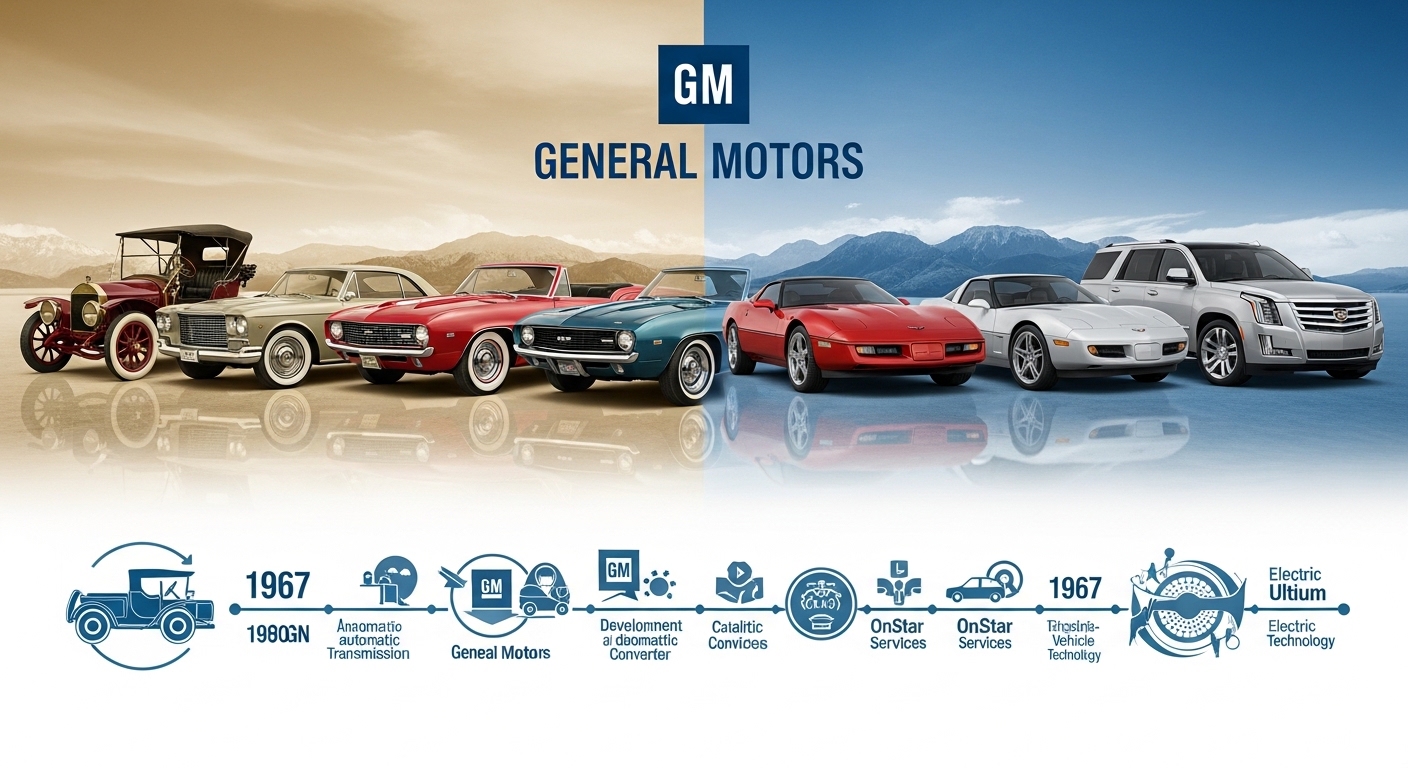
Introduction to General Motors
General Motors (GM) stands as one of the most influential automotive manufacturers in the world. Founded in 1908, the company has played a pivotal role in shaping the global automobile industry. Headquartered in Detroit, GM has consistently pushed the boundaries of engineering, design, and innovation. With a rich portfolio of brands and a presence in numerous countries, the company has earned its place as a symbol of American industrial strength and global mobility leadership.
A Brief History of General Motors
Founding and Early Growth
General Motor was established by William C. Durant as a holding company for several automobile brands. During its early years, GM acquired companies like Buick and Cadillac, quickly expanding its influence in the growing automotive market. By the 1920s, GM had become the largest automobile manufacturer in the United States.
Expansion and Global Reach
Throughout the 20th century, GM expanded its operations internationally, entering markets in Europe, Asia, and Latin America. The company’s strategy of offering vehicles across various price ranges helped it dominate multiple segments, from affordable cars to luxury models.
Iconic Brands Under General Motors
Chevrolet: The Everyday Car
Chevrolet is one of GM’s most recognizable brands, known for producing reliable and affordable vehicles. From compact cars to powerful trucks, Chevrolet caters to a broad audience.
Cadillac: Luxury and Prestige
Cadillac represents GM’s commitment to luxury, innovation, and cutting-edge technology. It has long been associated with premium quality and sophistication.
GMC: Strength and Utility
GMC focuses on trucks and utility vehicles, offering durability and performance for both personal and commercial use.
Innovation and Technological Advancements
Pioneering Automotive Technologies
General Motors has a history of introducing groundbreaking technologies, including automatic transmissions, safety features, and advanced infotainment systems. The company has also been a leader in research and development, investing heavily in future mobility solutions.
Electric Vehicles and Sustainability
In recent years, GM has shifted its focus toward sustainability and electric mobility. Vehicles like the Chevrolet Bolt EV demonstrate the company’s commitment to reducing emissions and embracing clean energy. GM aims to transition toward an all-electric future, aligning with global efforts to combat climate change.
Challenges and Comebacks
Financial Crisis and Restructuring
During the Global Financial Crisis, General Motors faced significant financial difficulties, leading to a government-backed bankruptcy in 2009. However, through restructuring and strategic reforms, the company successfully regained stability and returned to profitability.
Adapting to Modern Markets
In a rapidly evolving automotive landscape, GM continues to adapt by investing in autonomous driving technologies and digital services. Its ability to innovate and respond to market demands has been key to maintaining its competitive edge.
Global Impact and Economic Contribution
Employment and Industry Influence
General Motors provides employment to hundreds of thousands of people worldwide. Its operations support a vast network of suppliers, dealers, and service providers, contributing significantly to the global economy.
Leadership in Mobility of General Motors
As a pioneer in transportation, GM has influenced how people move, work, and live. Its vehicles are used in everyday commuting, logistics, and even advanced mobility solutions.
The Future of General Motors
Electric and Autonomous Vision of General Motors
Looking ahead, General Motors is investing in autonomous vehicle technology and electric platforms. Initiatives such as self-driving cars and connected vehicle ecosystems highlight the company’s vision for a smarter and safer transportation future.
Commitment to Sustainability of General Motors
GM aims to achieve carbon neutrality in its global operations, reflecting a strong commitment to environmental responsibility. By focusing on renewable energy and sustainable manufacturing, the company is shaping a greener future.
Conclusion
General Motors has remained a cornerstone of the automotive industry for over a century. From its early beginnings to its current focus on innovation and sustainability, GM continues to evolve and lead in a competitive global market. With its dedication to technology, quality, and environmental responsibility, General Motors is well-positioned to drive the future of mobility for generations to come.