









Introduction
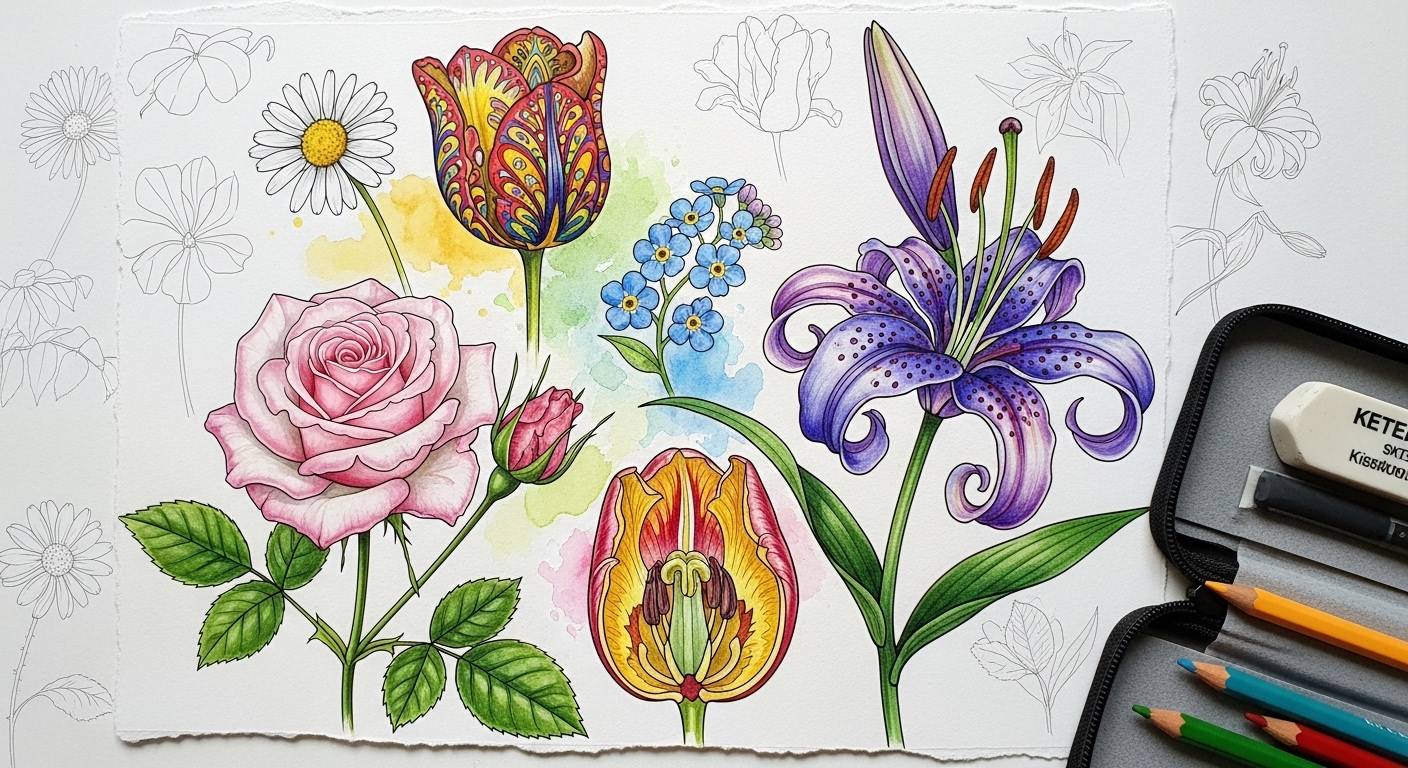
Flower drawing is one of the most popular and timeless forms of artistic expression. From beginners to professional artists, people across the world enjoy sketching flowers because of their natural beauty, variety, and symbolism. Whether it’s a simple daisy or a detailed rose, drawing flowers allows artists to connect with nature while improving their creative skills. This art form is not only visually pleasing but also relaxing and therapeutic, making it a favorite hobby for many.
The Importance of Flowers Drawing
Flower drawing plays a significant role in both artistic development and emotional well-being. For artists, it helps improve observation skills, hand coordination, and attention to detail. Flowers come in countless shapes, sizes, and colors, offering endless inspiration. For non-artists, it serves as a calming activity that reduces stress and encourages mindfulness. The act of focusing on petals, stems, and textures allows the mind to slow down and enjoy the present moment.
Basic Tools for Flowers Drawing
Pencils and Erasers
A good-quality pencil is essential for sketching outlines and adding shading. Beginners often start with HB or 2B pencils, while advanced artists may use a range of pencil grades. An eraser helps refine details and correct mistakes.
Paper for Flowers Drawing
Choosing the right paper is important. Smooth paper is ideal for detailed work, while textured paper can add depth and character to the drawing.
Coloring Materials
Colored pencils, watercolors, or markers can be used to bring flower drawings to life. Each medium offers a unique style and effect, allowing artists to experiment and find their preference.
Techniques for Drawing Flowers
Observational Drawing
This technique involves studying real flowers and drawing them as accurately as possible. It helps artists understand proportions, shapes, and details.
Step-by-Step Construction
Breaking down a flower into simple shapes—like circles and ovals—makes it easier to draw. This method is especially helpful for beginners.
Shading and Texture
Adding light and shadow gives depth and realism to the drawing. Techniques such as cross-hatching and blending can enhance the final result.
Popular Types of Flowers Drawing
Rose Drawings
Roses are one of the most commonly drawn flowers due to their layered petals and elegant structure. They can be simple or highly detailed depending on the artist’s skill level.
Sunflower Drawings
Sunflowers are known for their bold appearance and symmetrical shape. They are ideal for beginners because of their clear structure.
Lotus and Lily Drawings
These flowers are often associated with peace and spirituality. Their unique shapes make them a favorite in decorative and symbolic art.
Benefits of Flowers Drawing
Enhances Creativity
Drawing flowers encourages imagination and allows artists to experiment with different styles and techniques.
Improves Focus
The detailed nature of flower drawing requires concentration, which helps improve mental clarity and focus.
Reduces Stress
Engaging in creative activities like flower drawing can be calming and therapeutic, helping to reduce anxiety and stress.
Tips for Beginners
Start Simple Flowers Drawing
Begin with basic flower shapes and gradually move to more complex designs.
Practice Regularly on Flowers Drawing
Consistency is key to improvement. Even short daily practice sessions can make a big difference.
Observe Nature
Spend time looking at real flowers or reference images to understand their structure and details.
Don’t Fear Mistakes
Mistakes are part of the learning process. Each drawing is an opportunity to improve.
Conclusion of Flowers Drawing:
Flower drawing is a beautiful and rewarding art form that combines creativity, observation, and relaxation. Whether you are a beginner or an experienced artist, drawing flowers offers endless opportunities for growth and expression. With practice, patience, and a love for nature, anyone can create stunning floral artwork that captures the elegance and charm of flowers.